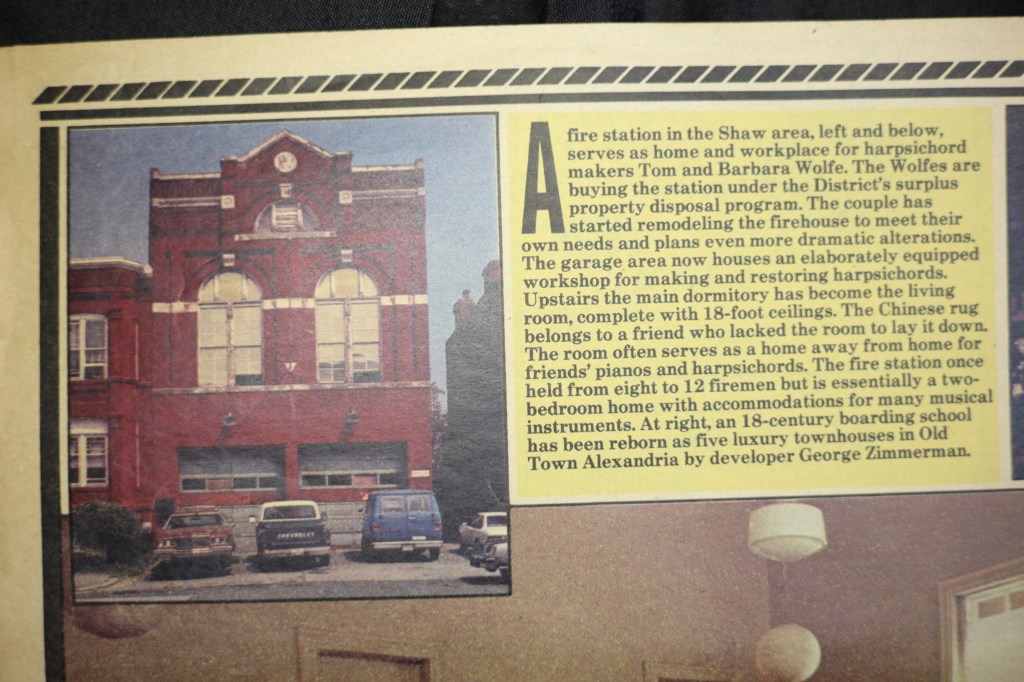
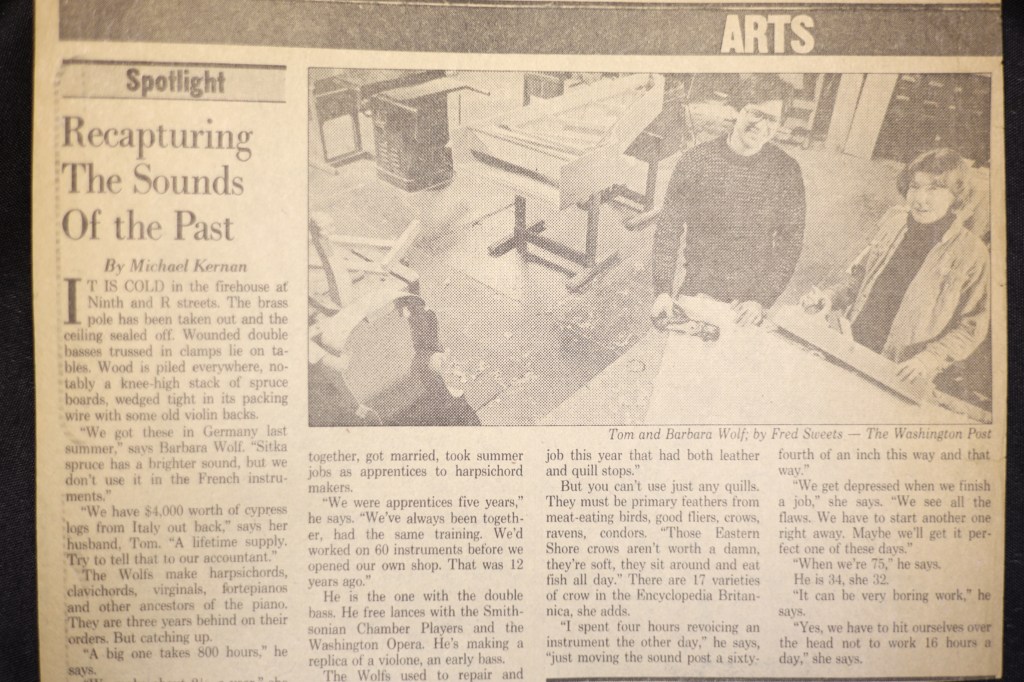
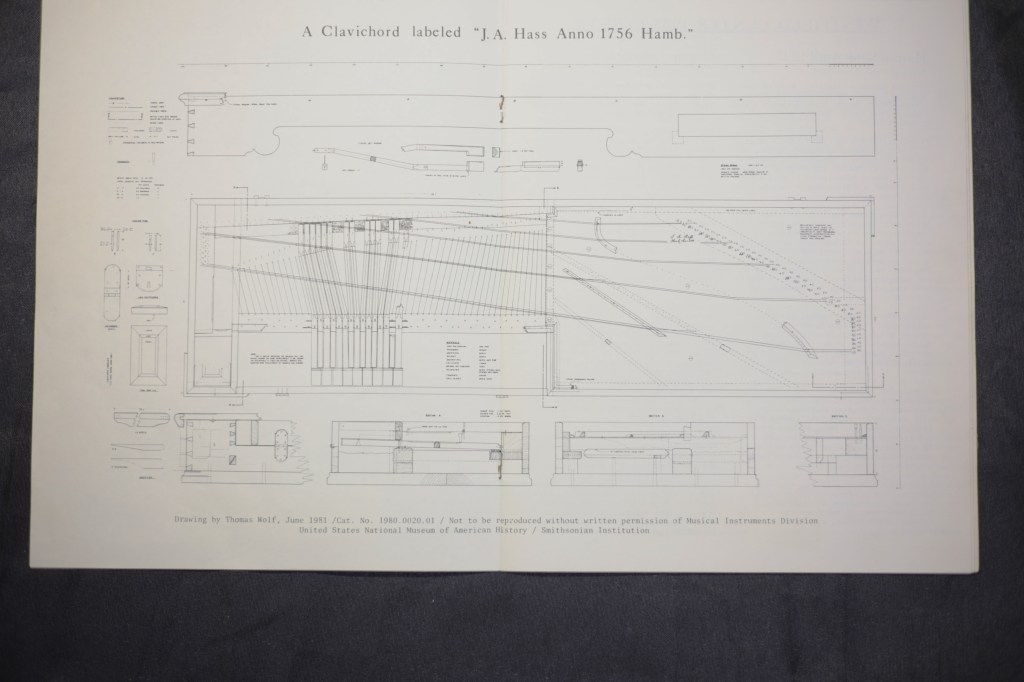
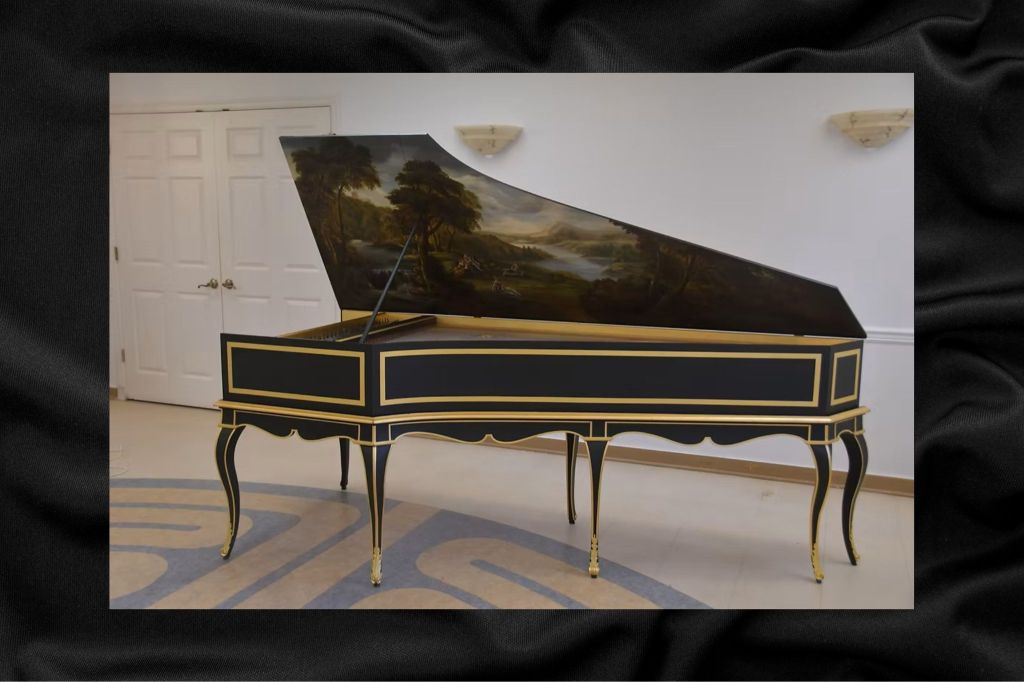
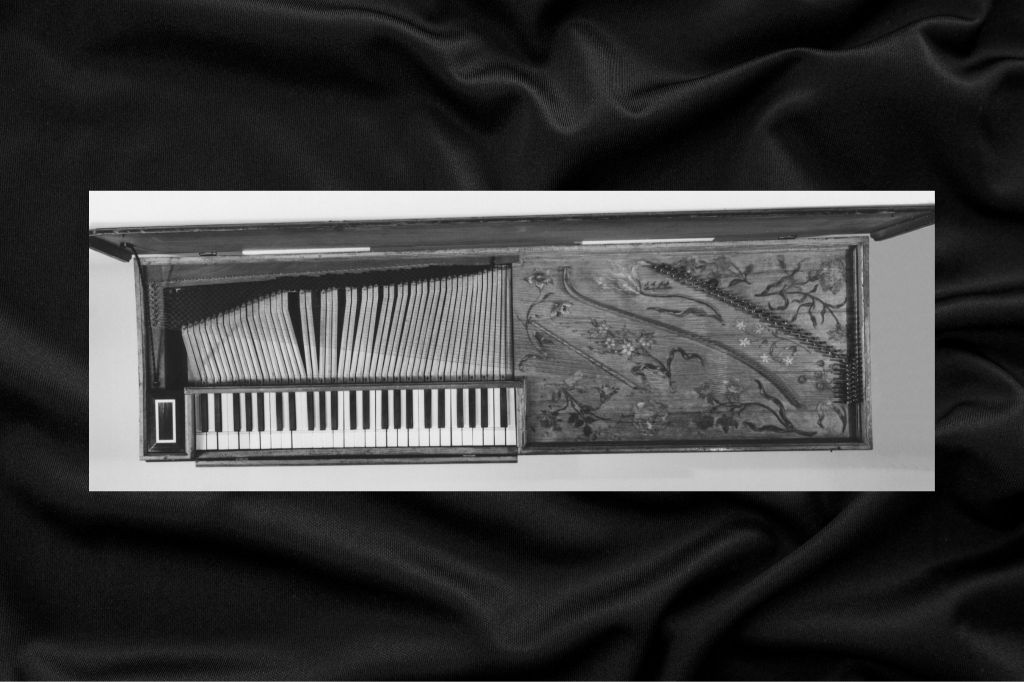
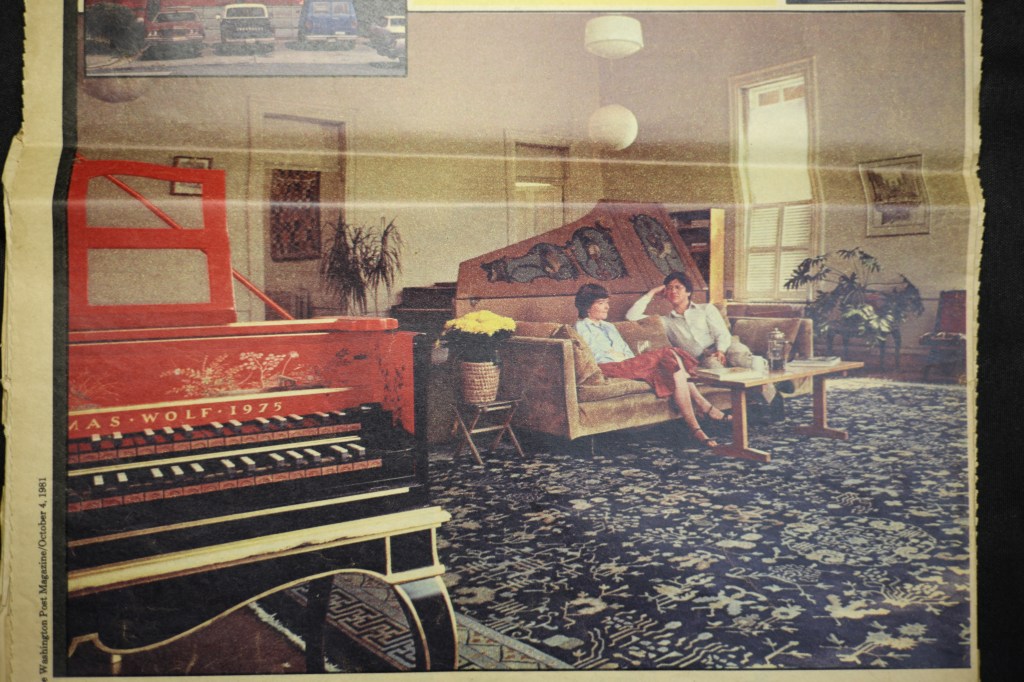
As word spread about the oddball couple making instruments in a Victorian firehouse in a (then) very non-touristy part of DC, the Washington Post covered both the building and the business. Never mind that what the Wolfes (sic) said about their craft was often garbled beyond comprehension. In 1981 it was gratifying to deliver a beautifully decorated French double, balancing a time-consuming but significant restoration project. The Smithsonian had acquired an important clavichord by J. A. Hass made in 1756, which they contracted us to restore in the museum’s conservation laboratory. This included making a technical drawing similar to others available from the museum.
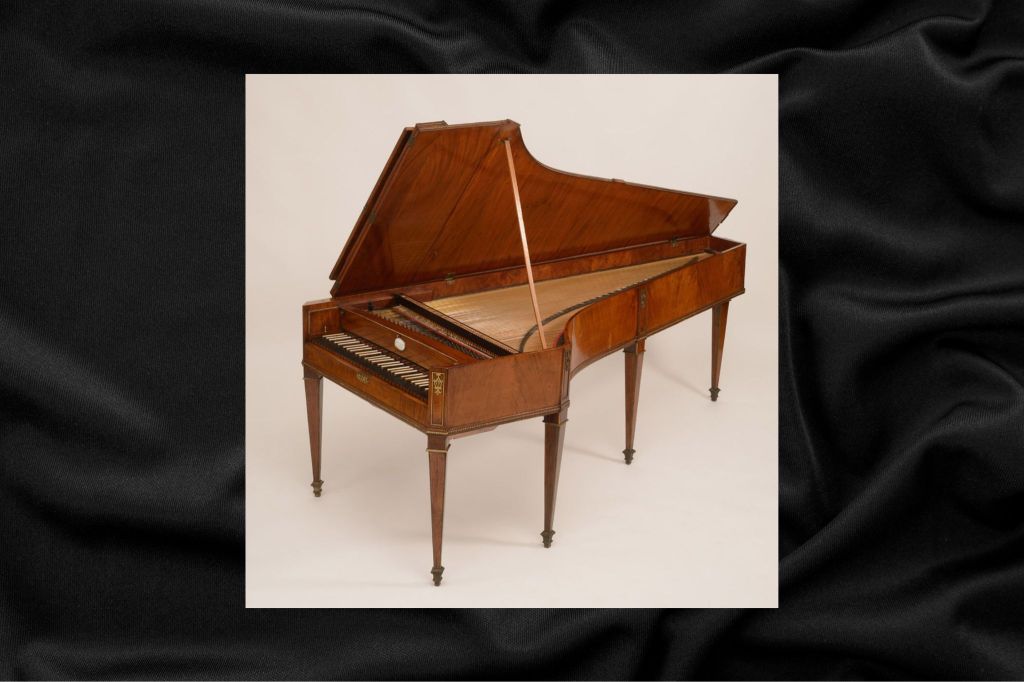
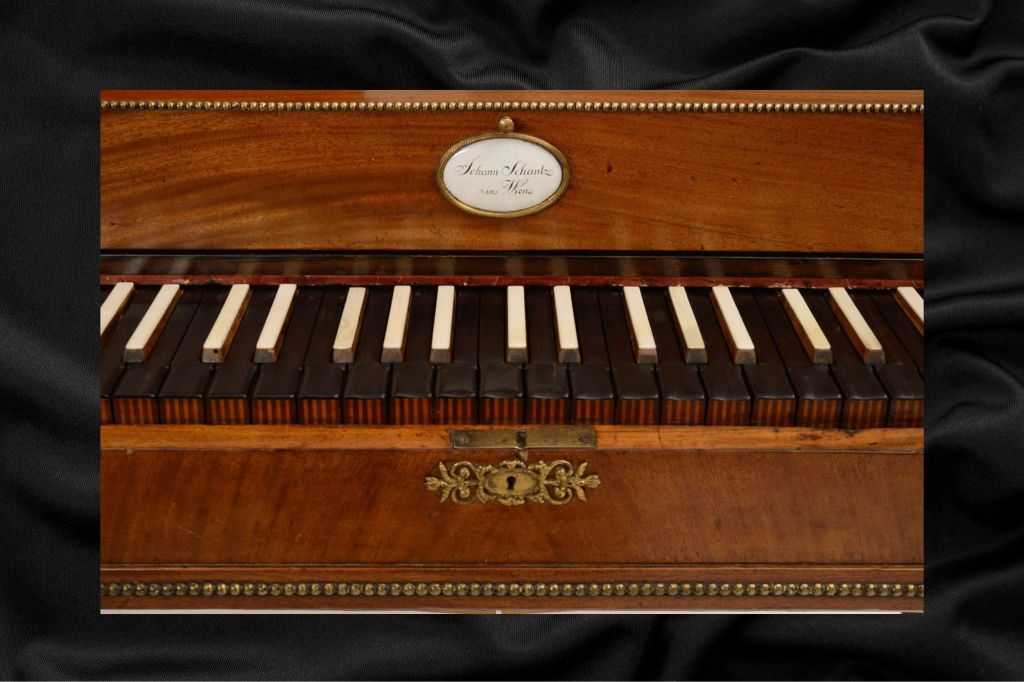
On the fortepiano horizon, a spectacular Viennese instrument by Johann Schantz had been purchased by musical luminary, influencer, and collector Charles P. Fisher after discovered it in an antique shop. Although he owned the 1730 Blanchet harpsichord, Charlie’s experience with early pianos was limited, so he asked us to help him work out issues with the action. This led to consideration of making a reproduction, since our previous three pianos had all been based on the German-style Dulcken. Other makers had turned to Viennese examples, which had somewhat different characteristics, so comparisons to ours were rather apples-to-oranges. Feeling pushed to make a Viennese piano, but not wanting to just do the same thing as others, we viewed the Schantz as a great opportunity. In order to assess its place among contemporary originals, the Wolfs and the Fishers went to the Germanisches Nationalmuseum in Nuremberg for a piano crawl in their extensive collection. After days in the underground vaults examining comparable antiques, we all came away convinced that Schantz deserved his reputation as a top Viennese maker in the late 18th/early 19th century. The Fishers’ piano was about to make its mark on the modern fortepiano scene with the Wolfs’ assistance.

