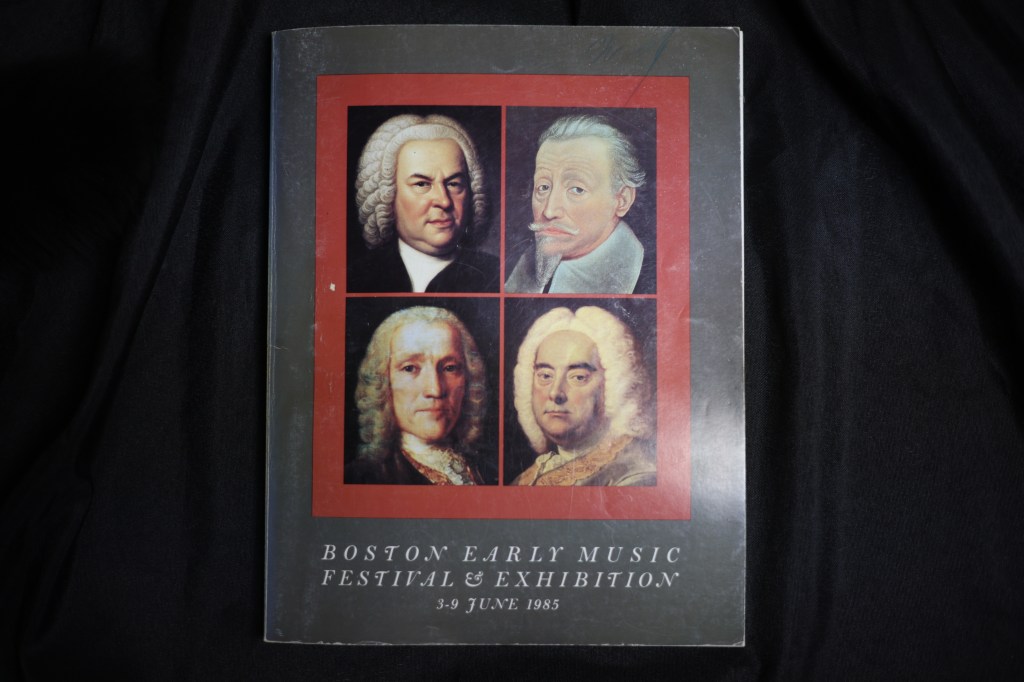
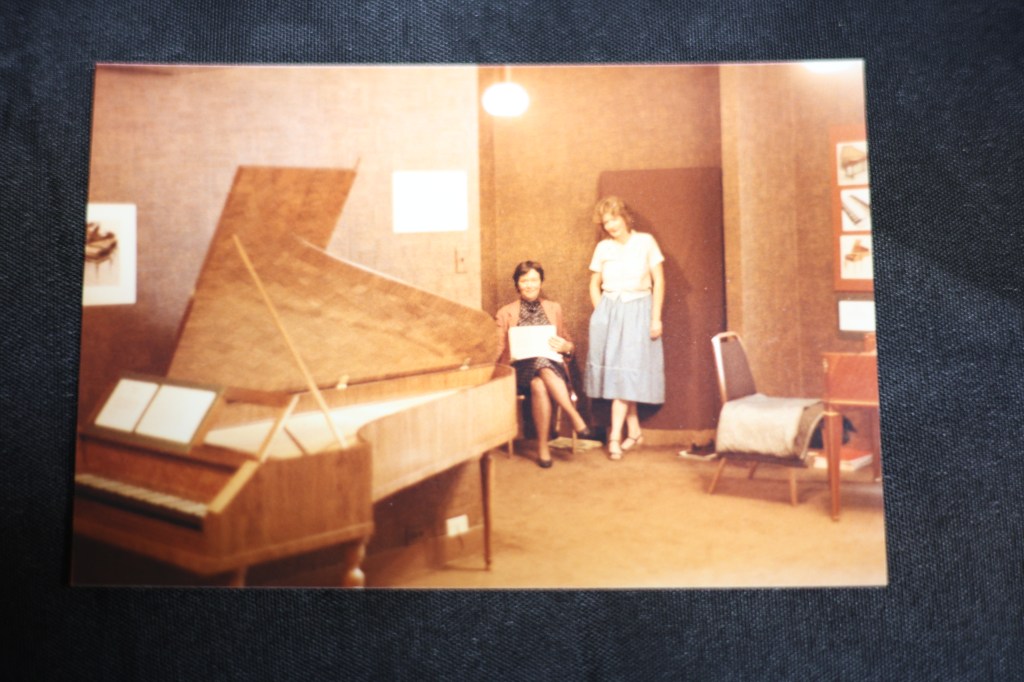
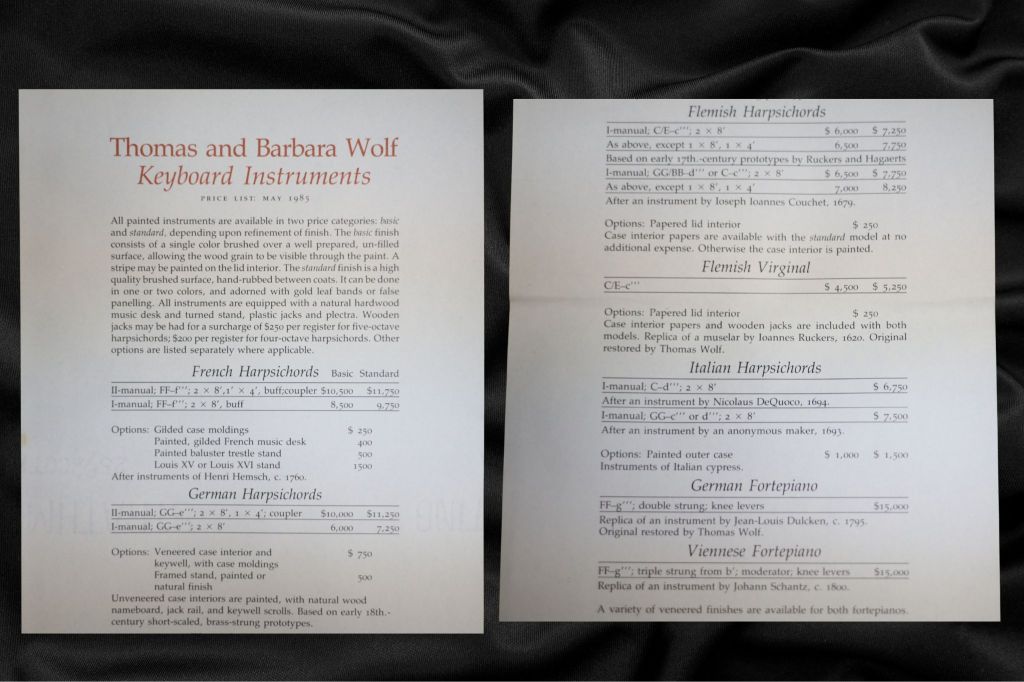
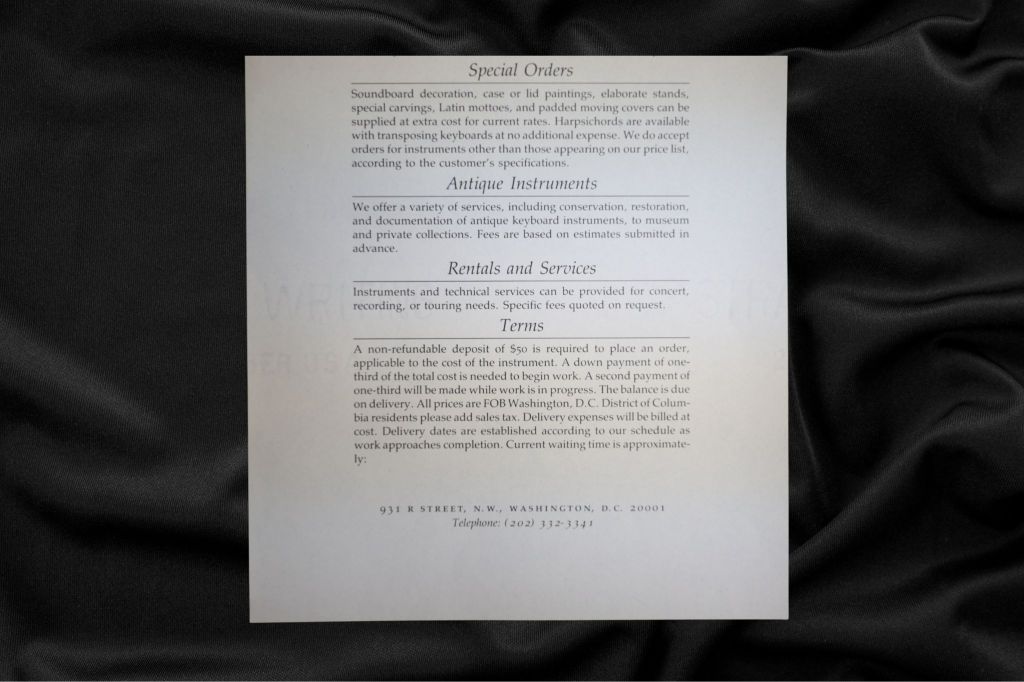
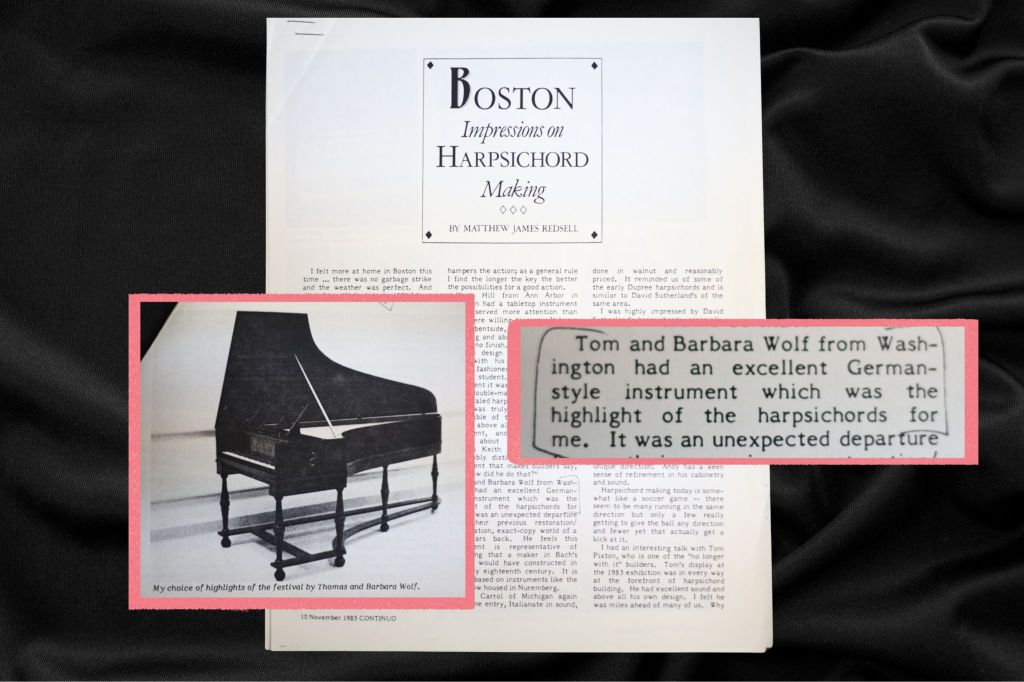
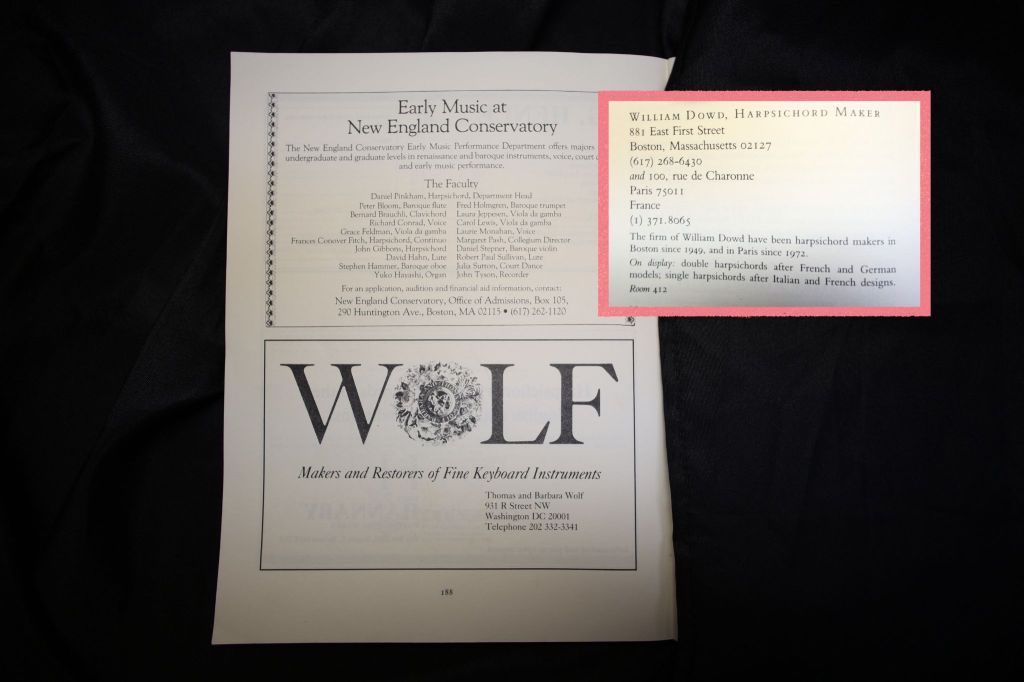
The Boston Early Music Festival was in high gear when its third outing coincided with the Bach/Handel/Scarlatti anniversary. The WOLF advertisement in the festival book had to be more eye-catching, and the price list was re-printed to include new offerings – now twice its original length. More significantly, William Dowd finally decided to exhibit in one of the hotel rooms available for keyboard makers, partly to promote his new Mietke design. Also importantly, he invited us to share his room (theoretically not allowed, but Bill could get away with it). The Wolf offerings were non-competitive and complementary: a couple of fortepianos and our new German single. The latter was a standout among the harpsichords, as noted in a review by the editor of the once-influential Continuo magazine. Barbara and Peggy Dowd took refuge in a back corner of the room.
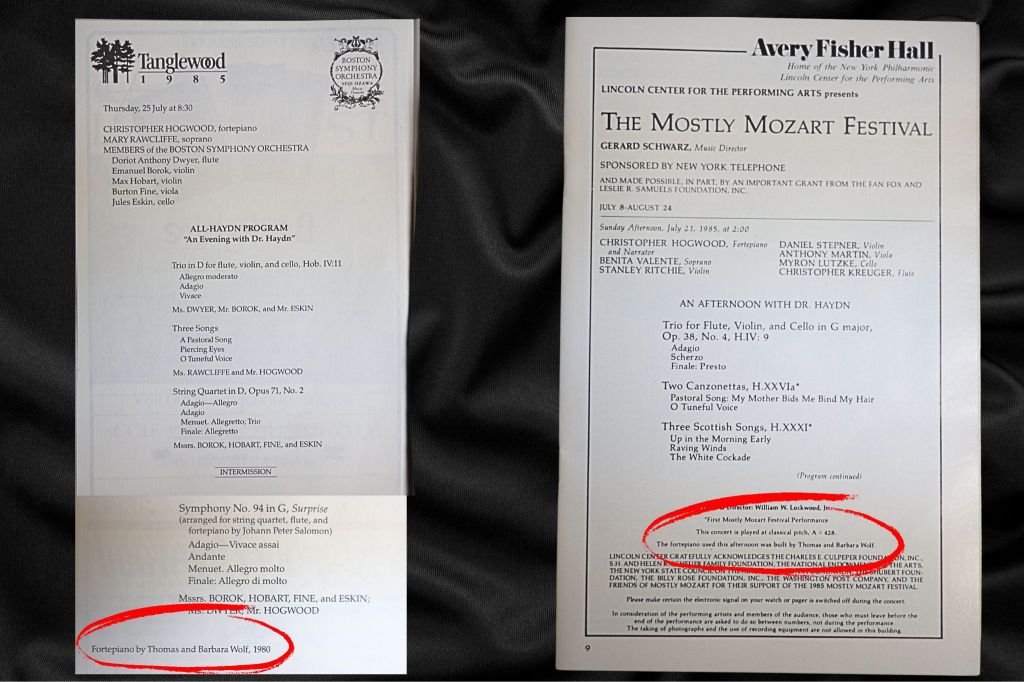
After the first Schantz was finished, Christopher Hogwood took a keen interest in its availability. He was touring with a couple of programs that needed just such an instrument, so the owner agreed to rent it out for him. Among the venues where they appeared that summer were the Mostly Mozart festival in New York and Tanglewood. Chris had been a regular visitor to the shop since the year after it opened; we became personal friends as well as professional colleagues. He hardly needed another instrument, given his impressive collection in the UK, but in 1985 he found an excuse to order one from us. With another Bachjahr looming in 1988 (CPE Bach’s death), he decided to keep a suitable clavichord (of which he was a great proponent) in the States. He would take over Boston’s Handel & Haydn Society in 1986, and the clavichord would be a companion for him here as he spent increasing amounts of time in this country.
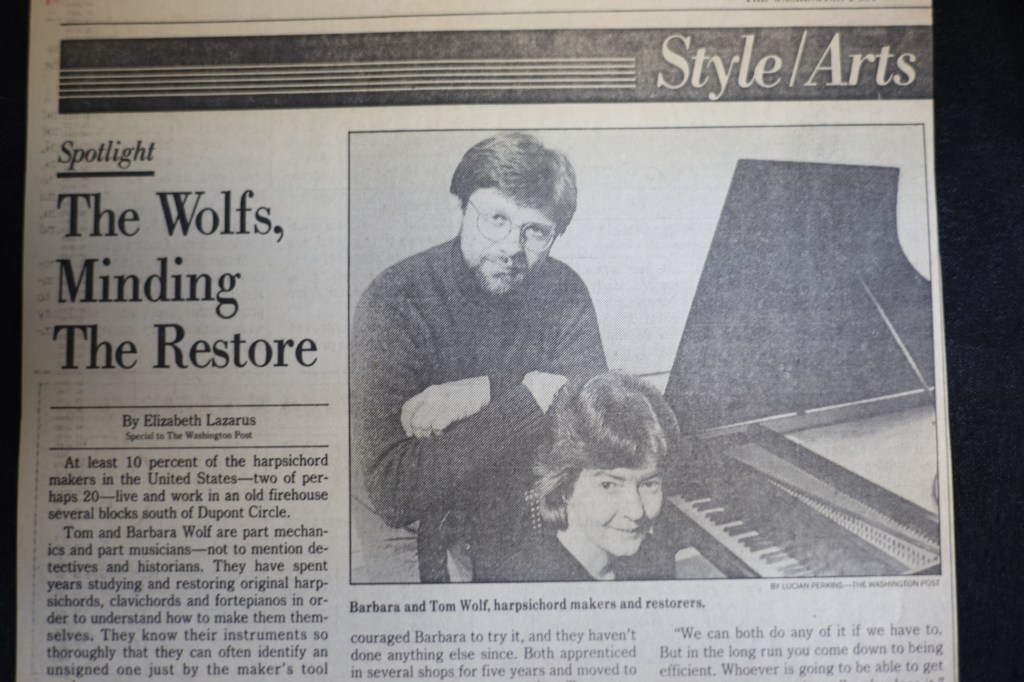
Meanwhile, the Washington Post continued to document our activities on a regular basis.

