From the late 1980s through the mid-1990s our production more than doubled, reflecting both the influx of harpsichord orders after the Dowd shop closed, but also the approach of the big Mozart year in 1991: the bicentennial of his death.
Everyone and his dog suddenly needed a fortepiano, or was finally taking the early piano more seriously and viewing it as a “primary” instrument that might have to be purchased. We added another woodworker, and with one of Bill’s most valuable former employees, decorative finisher Nancy Kempf, there were now six people in the shop full time.
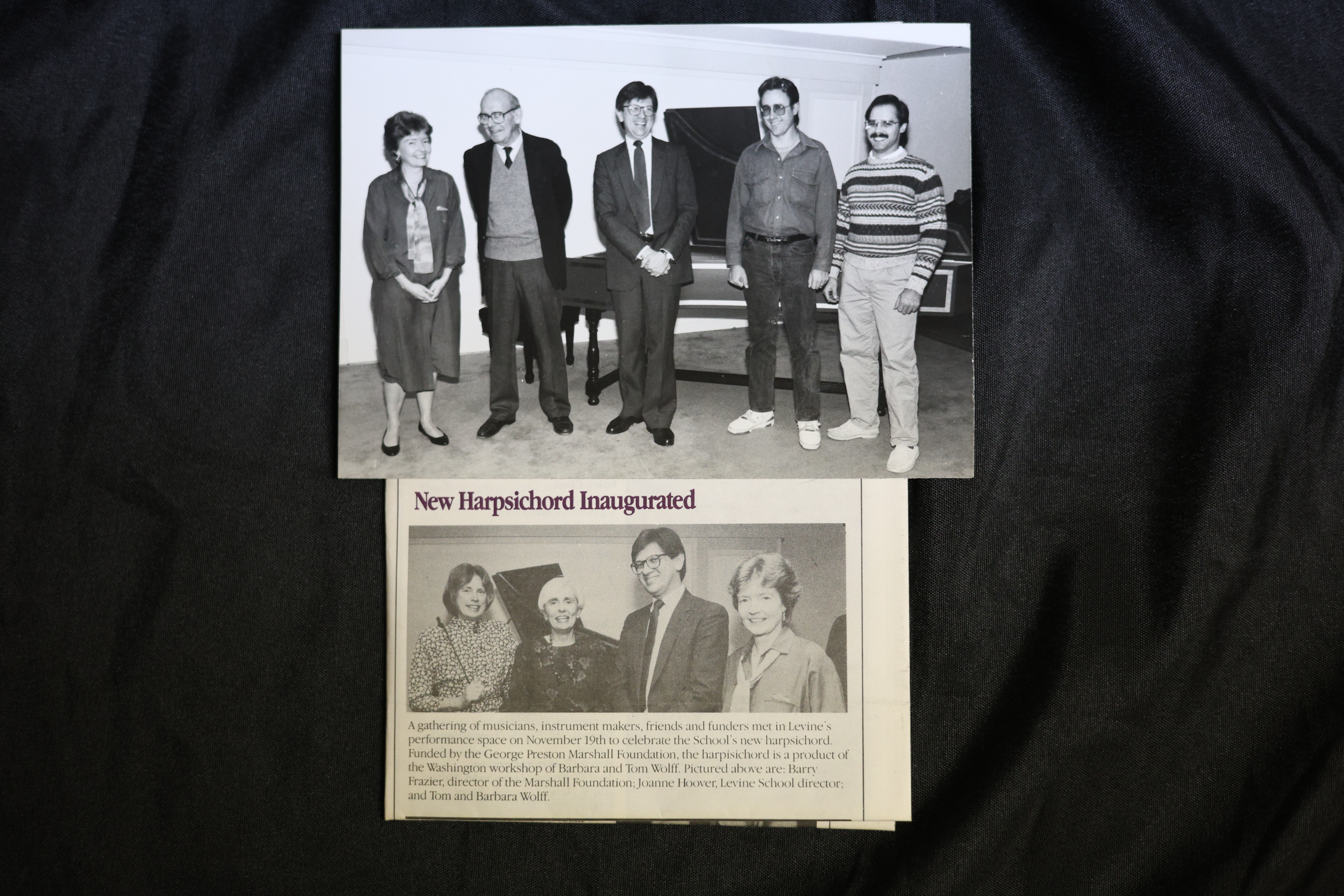
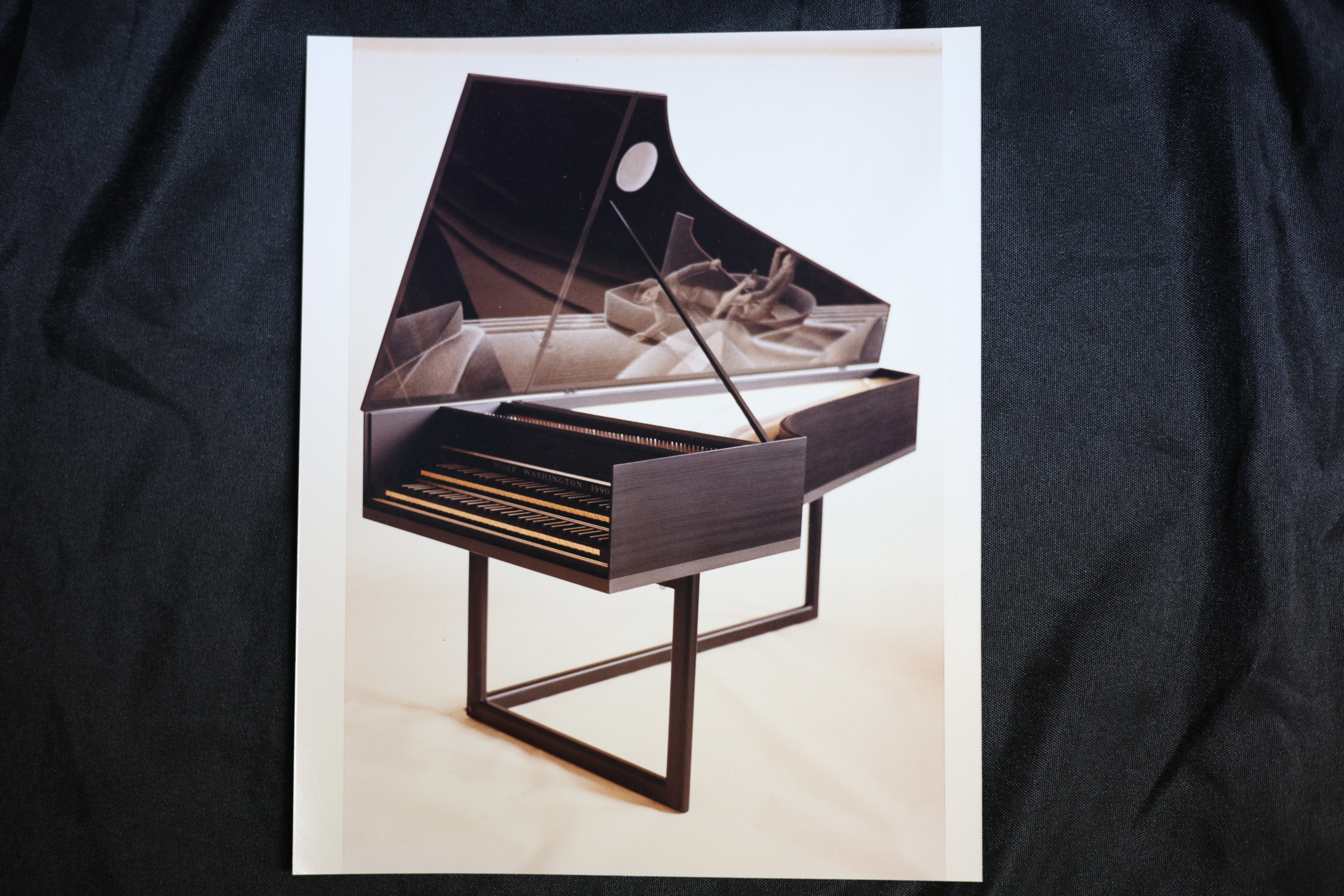
One of the first harpsichords made to Dowd’s Dumont design went to the Levine School in DC, funded by a grant from the founder of the (then) Washington Redskins. Their special request was that we find a way to use the burgundy and gold team colors: easy! – a burgundy red case with lots of gold bands and moldings. On the other hand, another client hired a special artist friend to do a lid painting for his harpsichord. Fortunately, we didn’t do any other decoration until the lid was finished, because it dictated a very modern case treatment and stand.
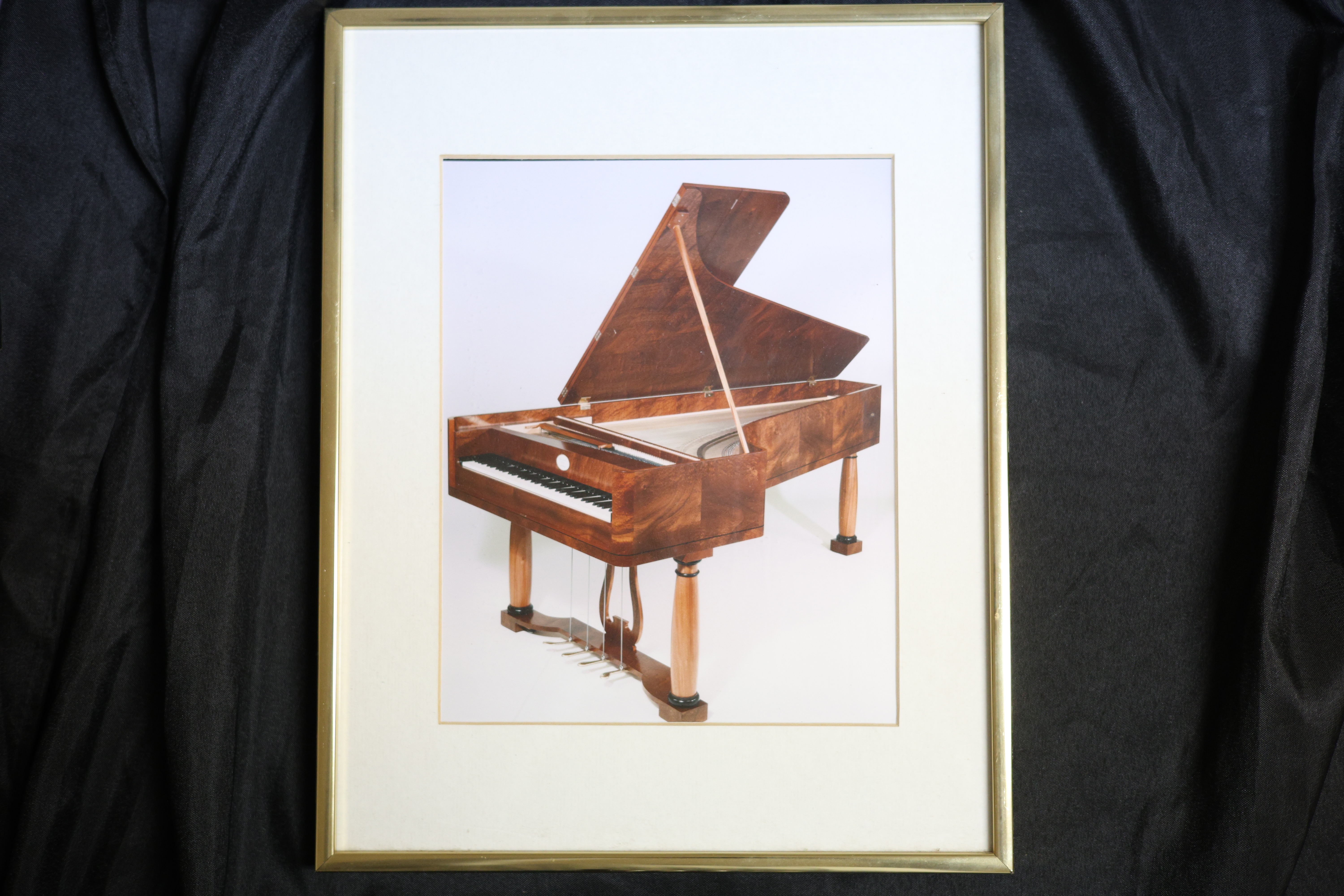
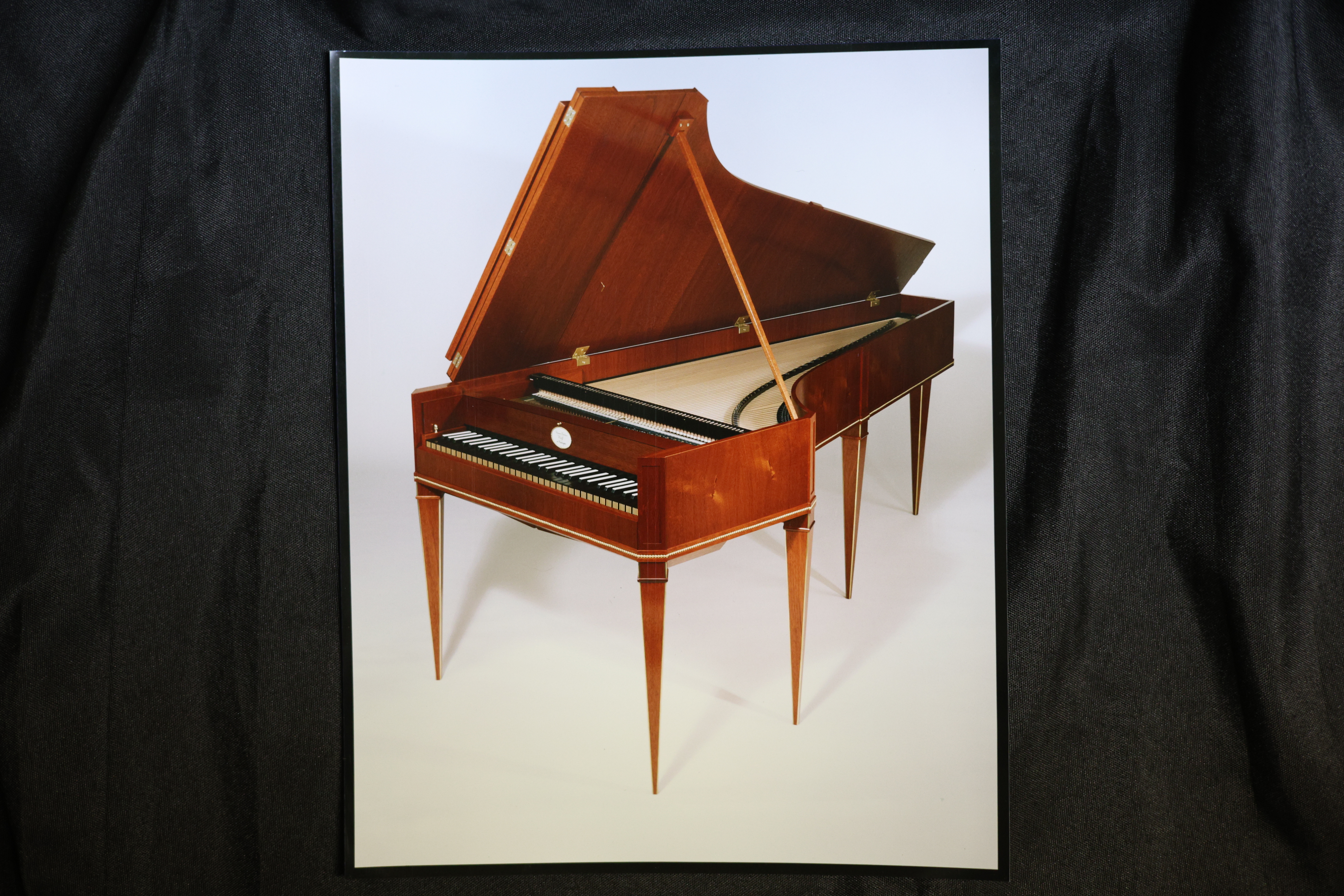
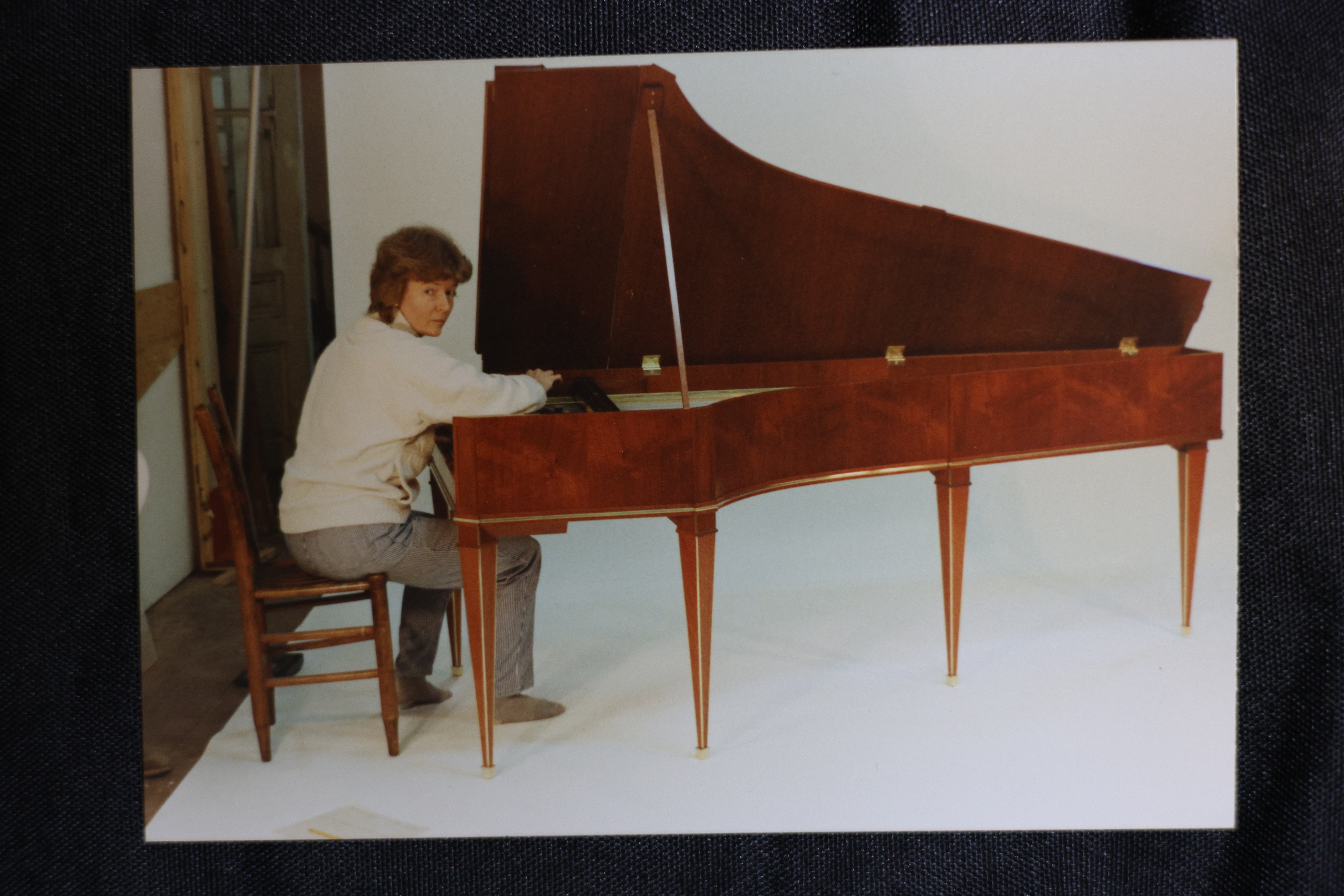
As pianos took over our lives, a second 6-octave instrument was made for the very well-known modern pianist Lambert Orkis, who had been drawn backwards historically via instruments at the Smithsonian. And another batch of four Schantzes materialized, two going to the highly influential musicians Malcolm Bilson and Nicholas McGegan. Another was made for the shop to use for rentals because there was so much demand from people and organizations who didn’t have anything ready for the Mozart year. (After several years of high-profile use all over this country and abroad, it was sold to pianist and scholar Robert Levin, who had used it for numerous concerts.)
Meanwhile, before Nic McGegan’s piano headed to California, it needed a final tuning after being photographed. Barbara was wondering where this would all end, if ever.

