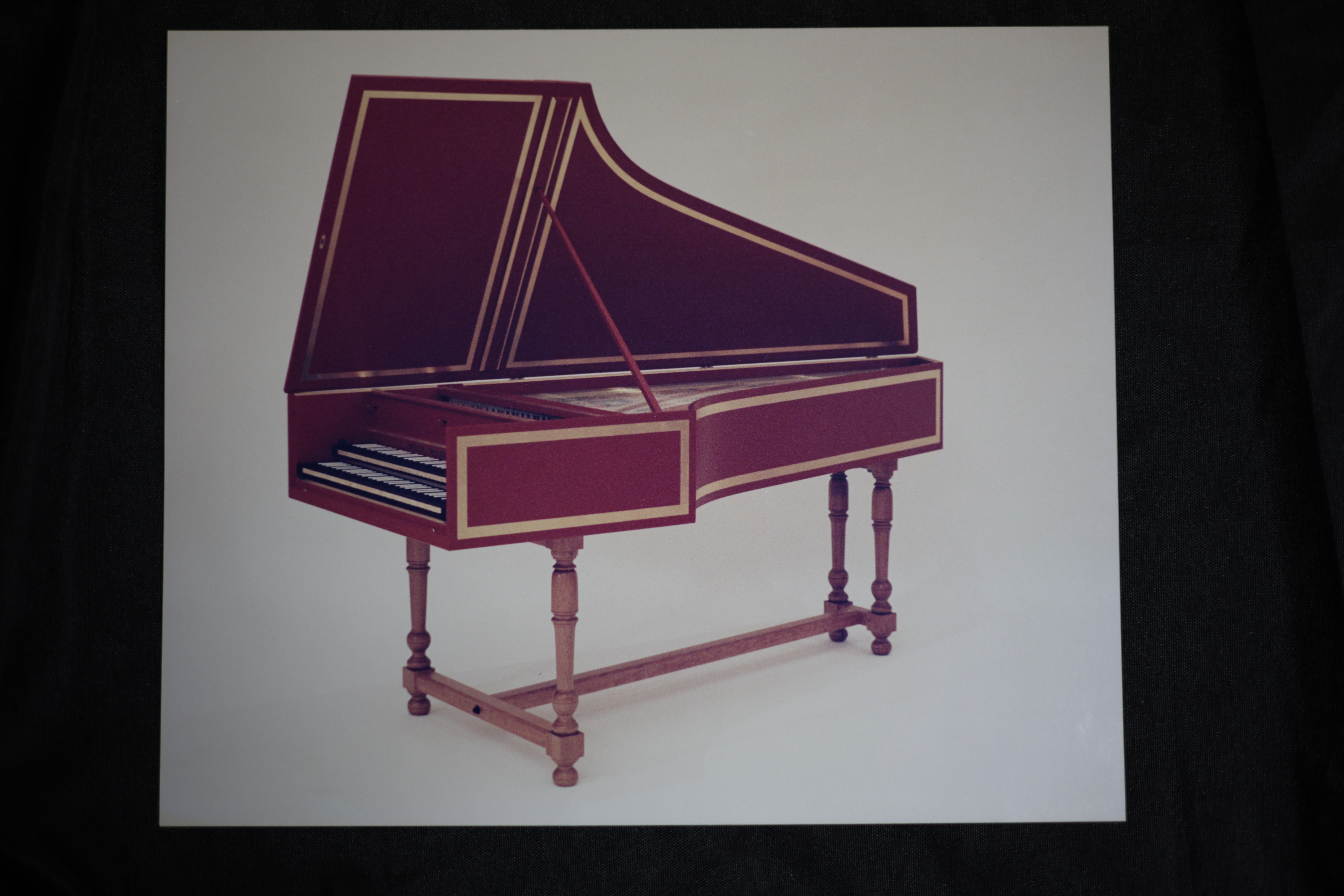
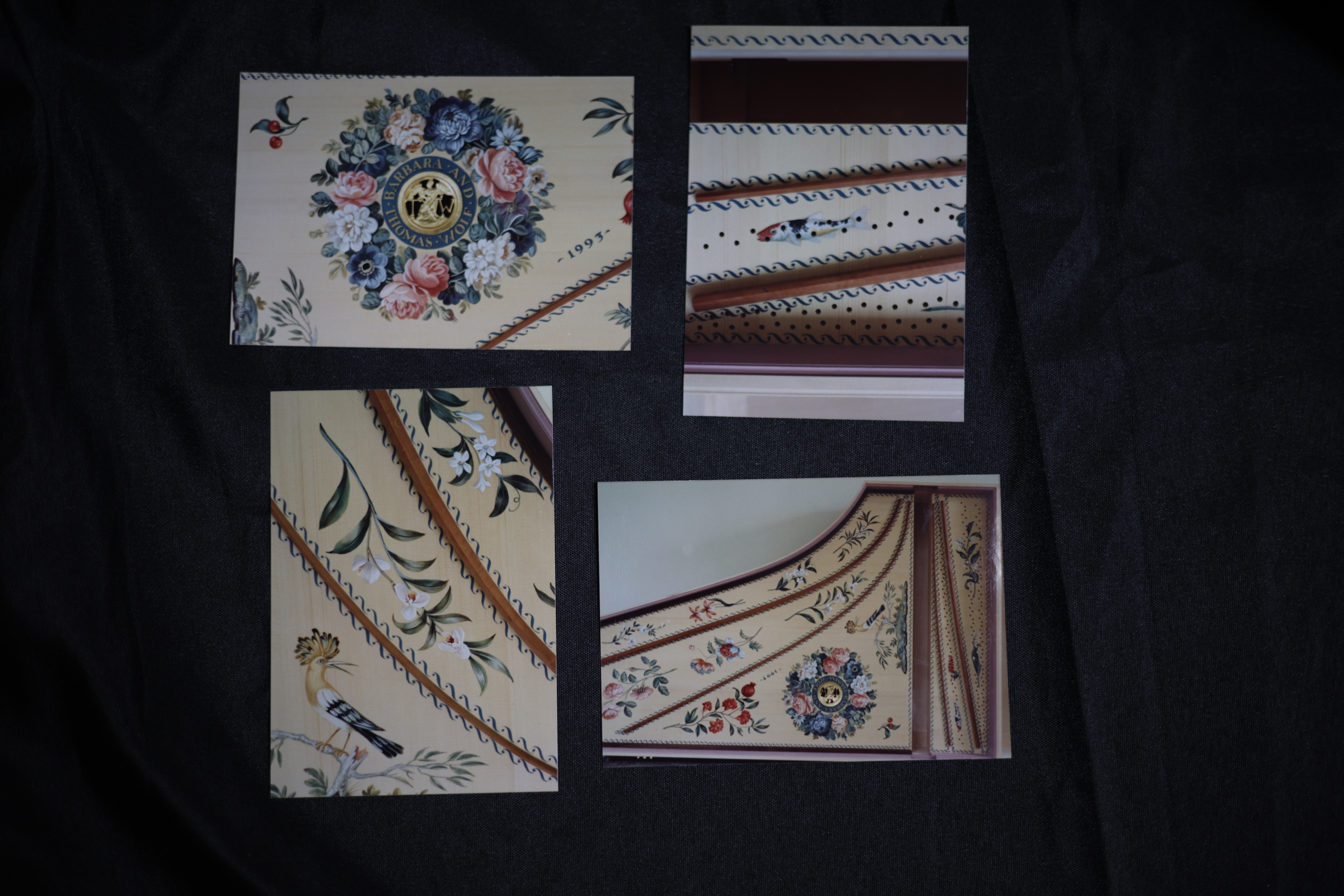
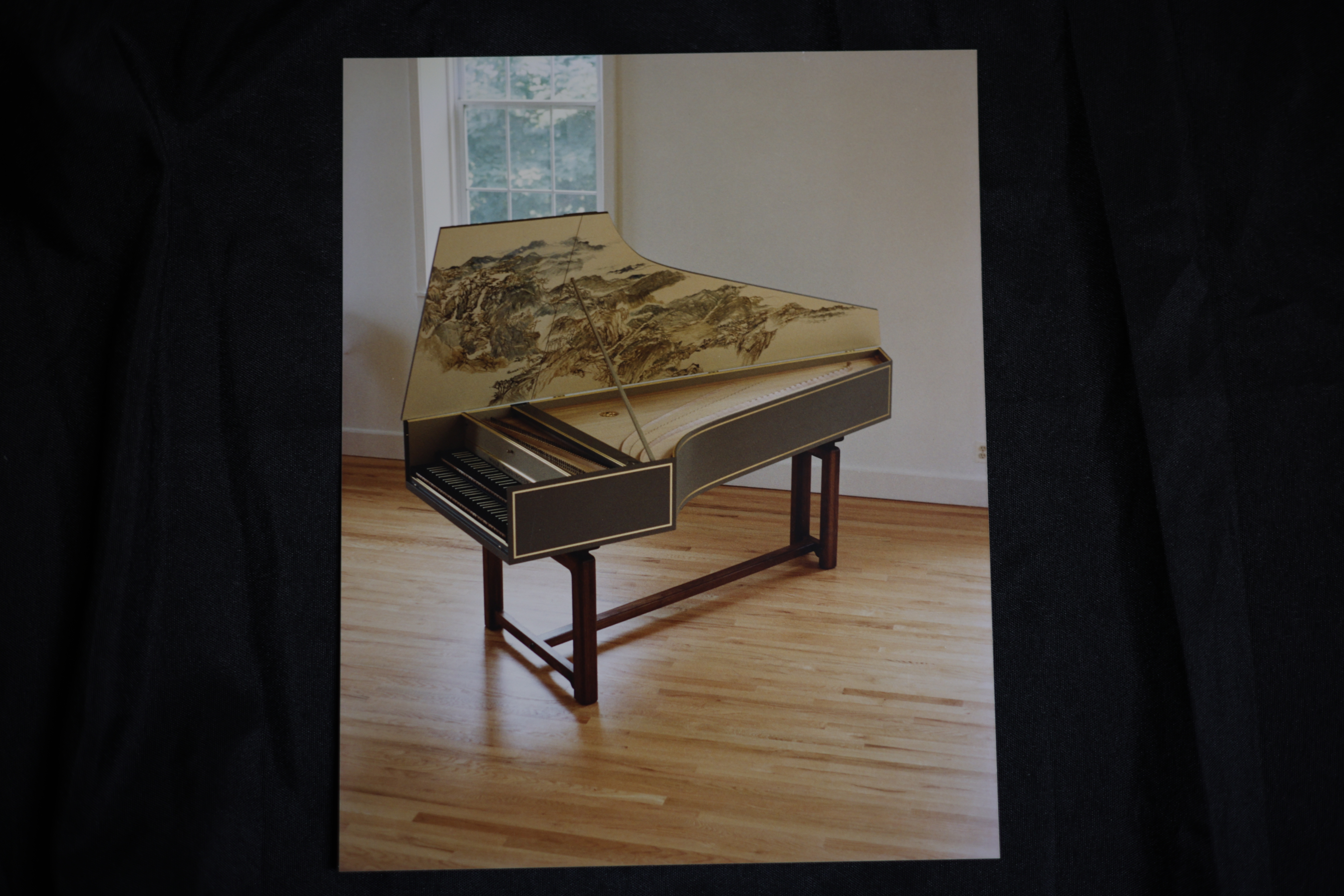
As the Mozart fortepiano flurry began to stabilize, we saw more harpsichords out the door again in 1993. A surprise order from the Harvard Business School had to be delivered in time for the inaugural concert of a new chapel on its campus within a year. It was the only time we let an order jump to the head of the waiting list, so a significant “expediting fee” was added. Visually, it had to fit in with a beautifully designed minimalist interior, but a soundboard painting by Sheridan Germann was allowed.
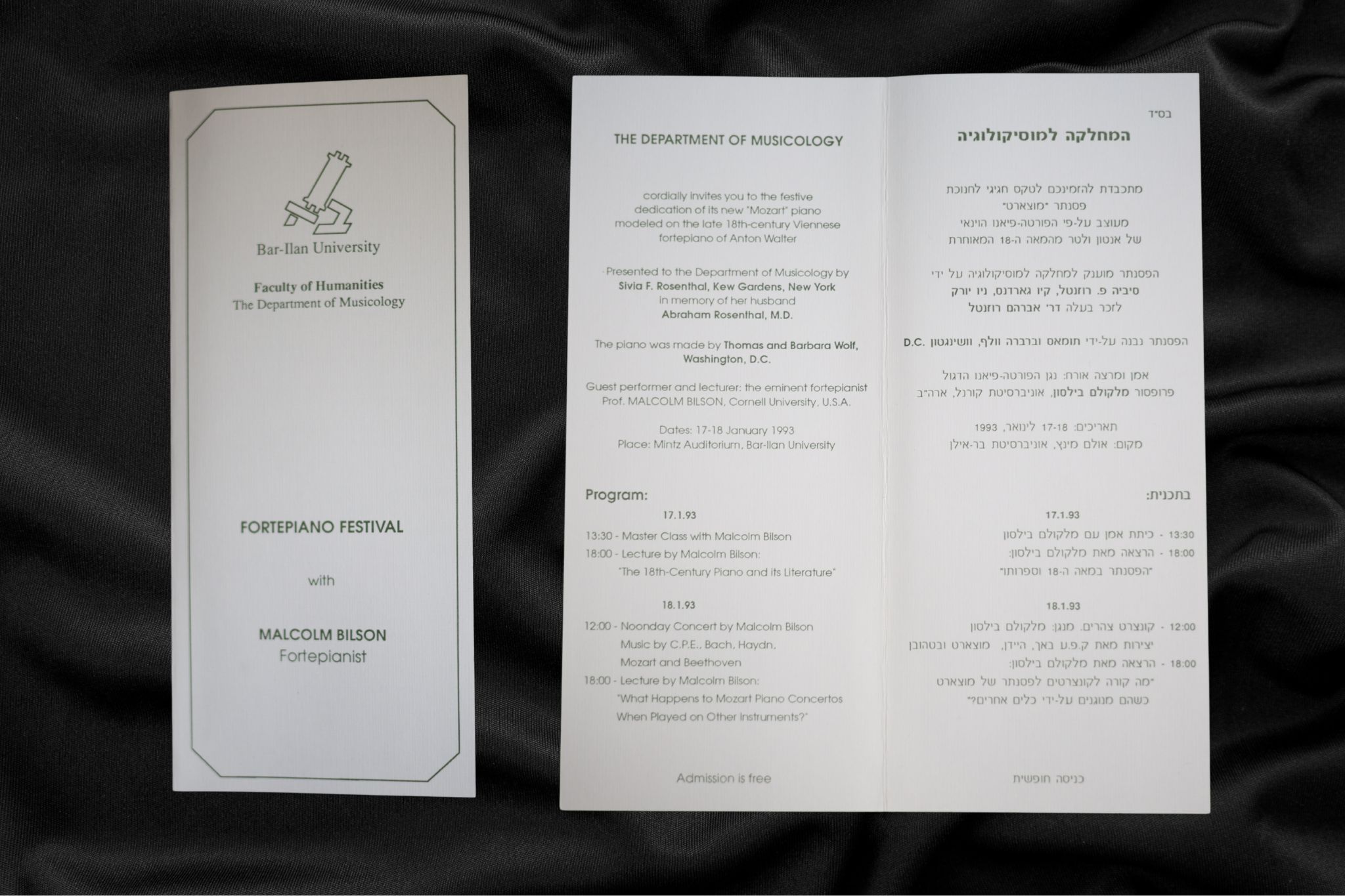
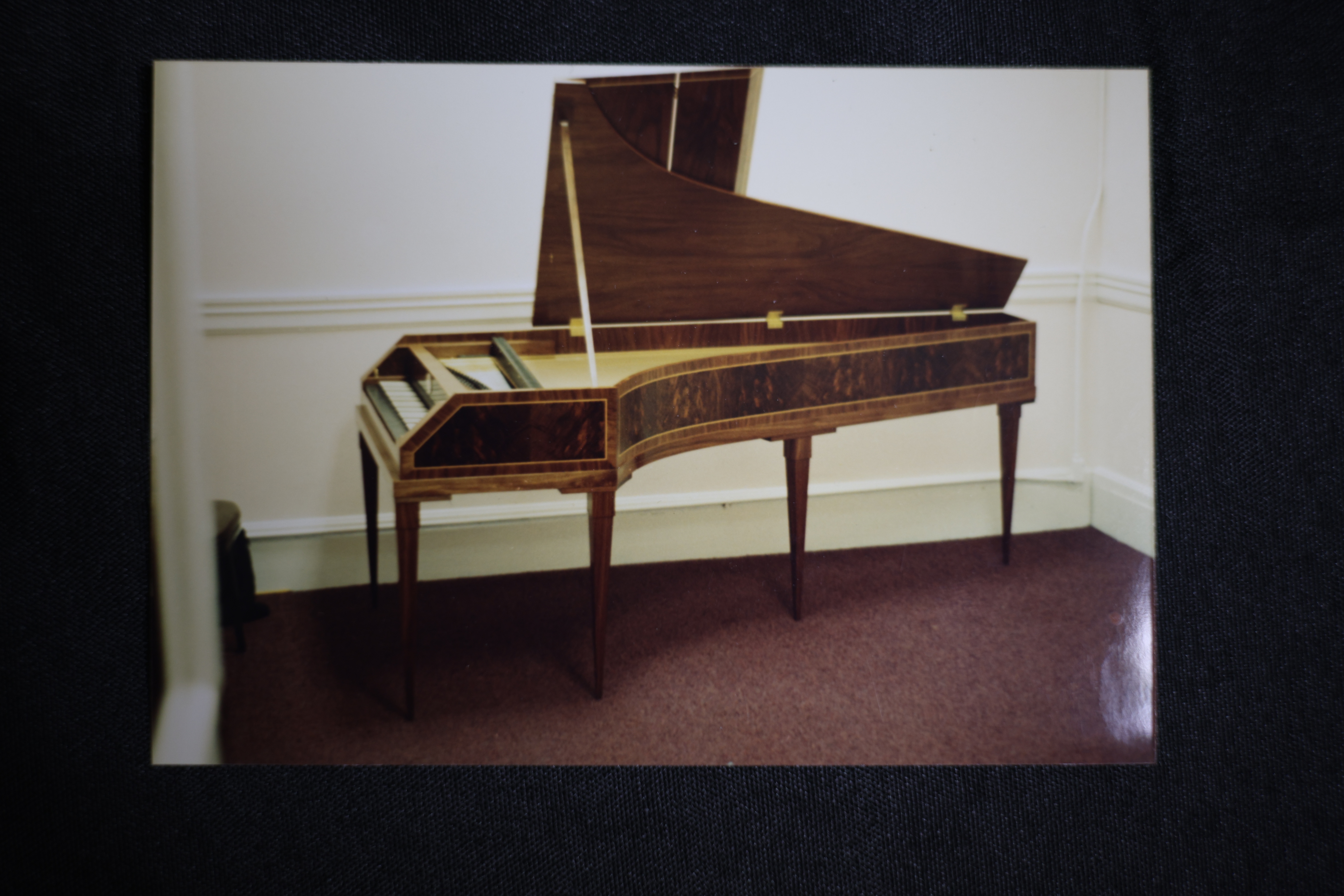
Farther away, one of our first Walter pianos, made in time for Mozart year festivities, was still a novelty when Malcolm Bilson arrived to showcase it. Another Walter, made for the New England Conservatory, was more decoratively veneered than usual.
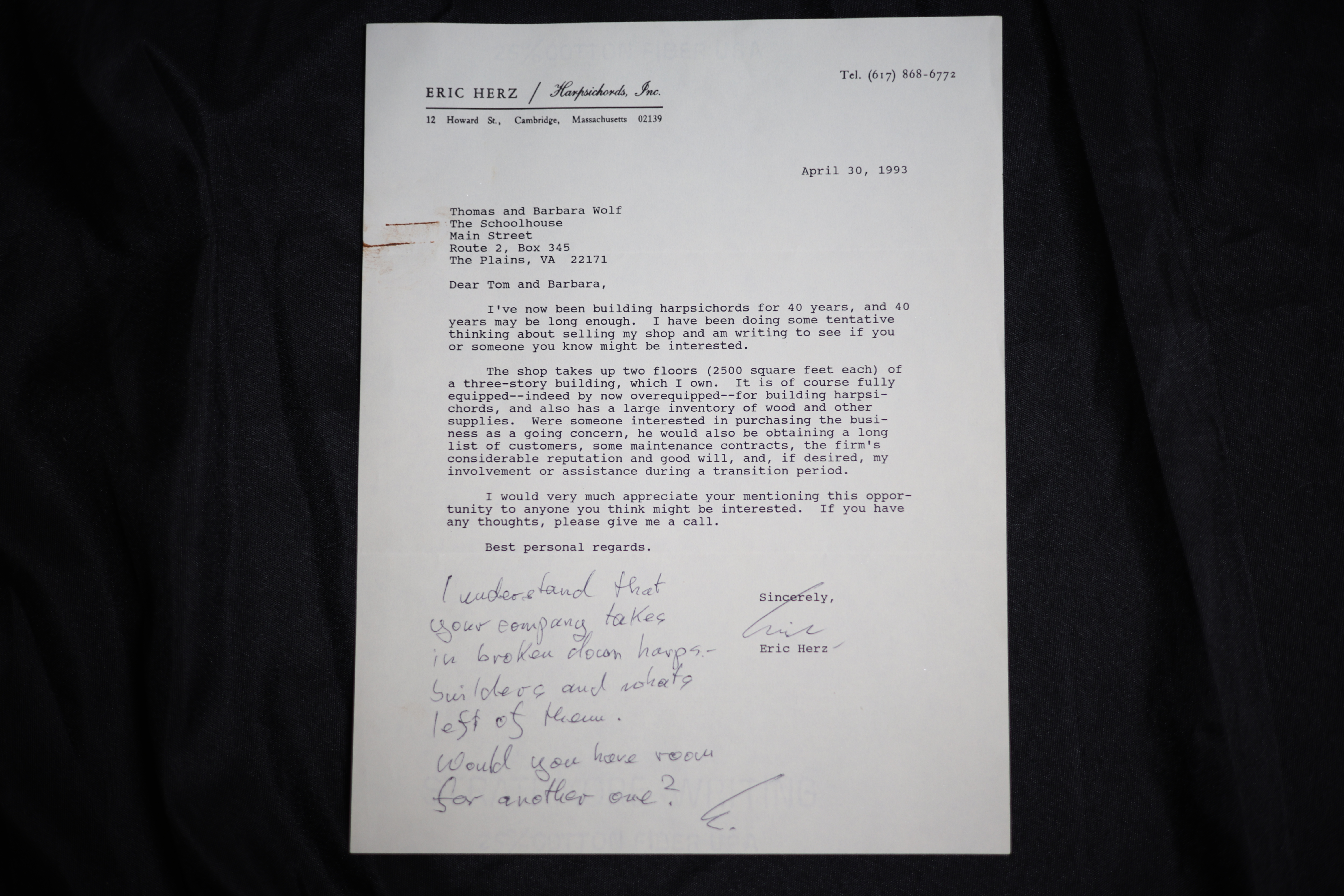
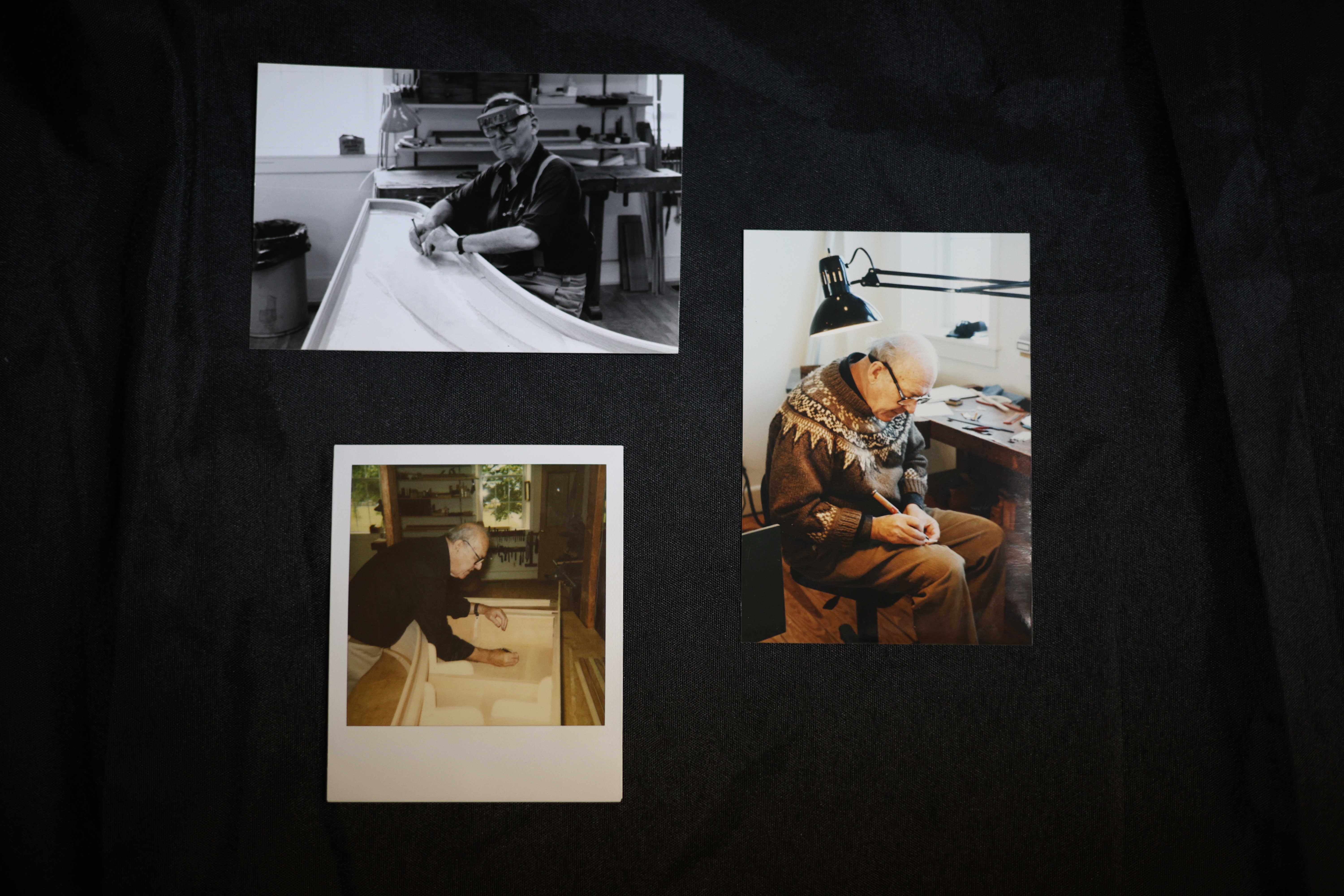
After we moved into the schoolhouse, Bill Dowd used much of his time the following year to make his final harpsichord, a Mietke, for an old client in France. The shop gave him some help, but it was a struggle for him physically. He signed the inside of the case – a bittersweet task, marking the last of hundreds of instruments. At the same time, our first master Eric Herz, now a couple of years older than Bill, looked ahead to closing his shop. A letter he sent to people of interest included a note wondering if we might have room for one more “broken down harpsichord maker” in our shop (his business closed in 1995).
Later in the year another harpsichord with unusual decorative treatment was shipped straight to Hong Kong. Joyce Lindorff’s husband Dave, a journalist with a specialty in economics, had work there during its repatriation to China in 1997. His Chinese teacher was also a painter, so they asked him to do a lid painting. The vast landscape was filled with details that could only be seen when standing next to the instrument. But it also dictated other decorative decisions, including a stand inspired by Chinese domestic furniture and Asian-style hardware.

