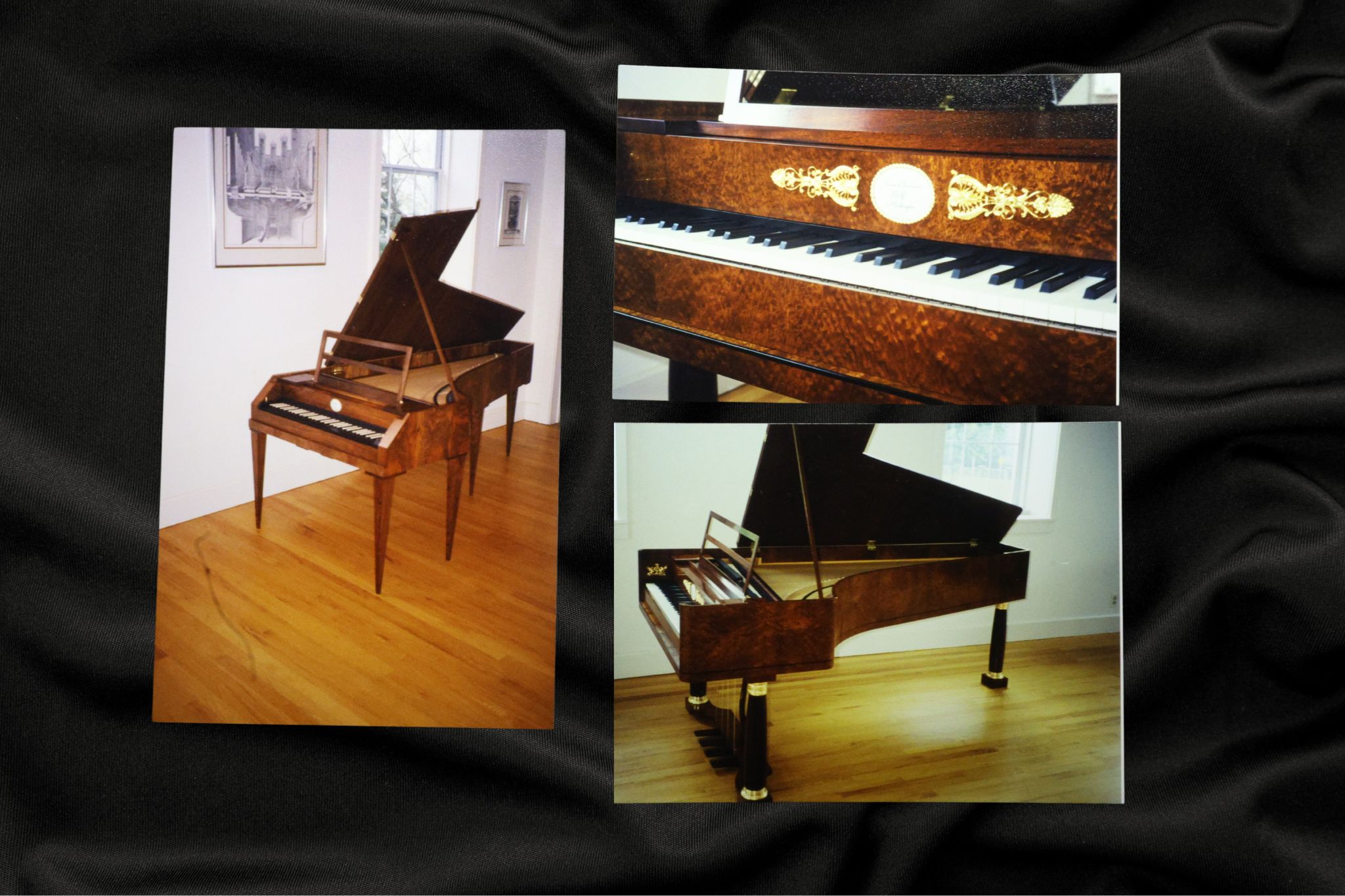
Before we could get the two Silbermanns made and shipped to Europe, a couple of other pianos in progress had to go out the door. The last of the little batch of Walters headed to Mexico City, while what would be the last of our 6-octave pianos went off to Seattle. The latter, enhanced by appropriate ormolu decorations and gilded stand elements, looked spectacular.
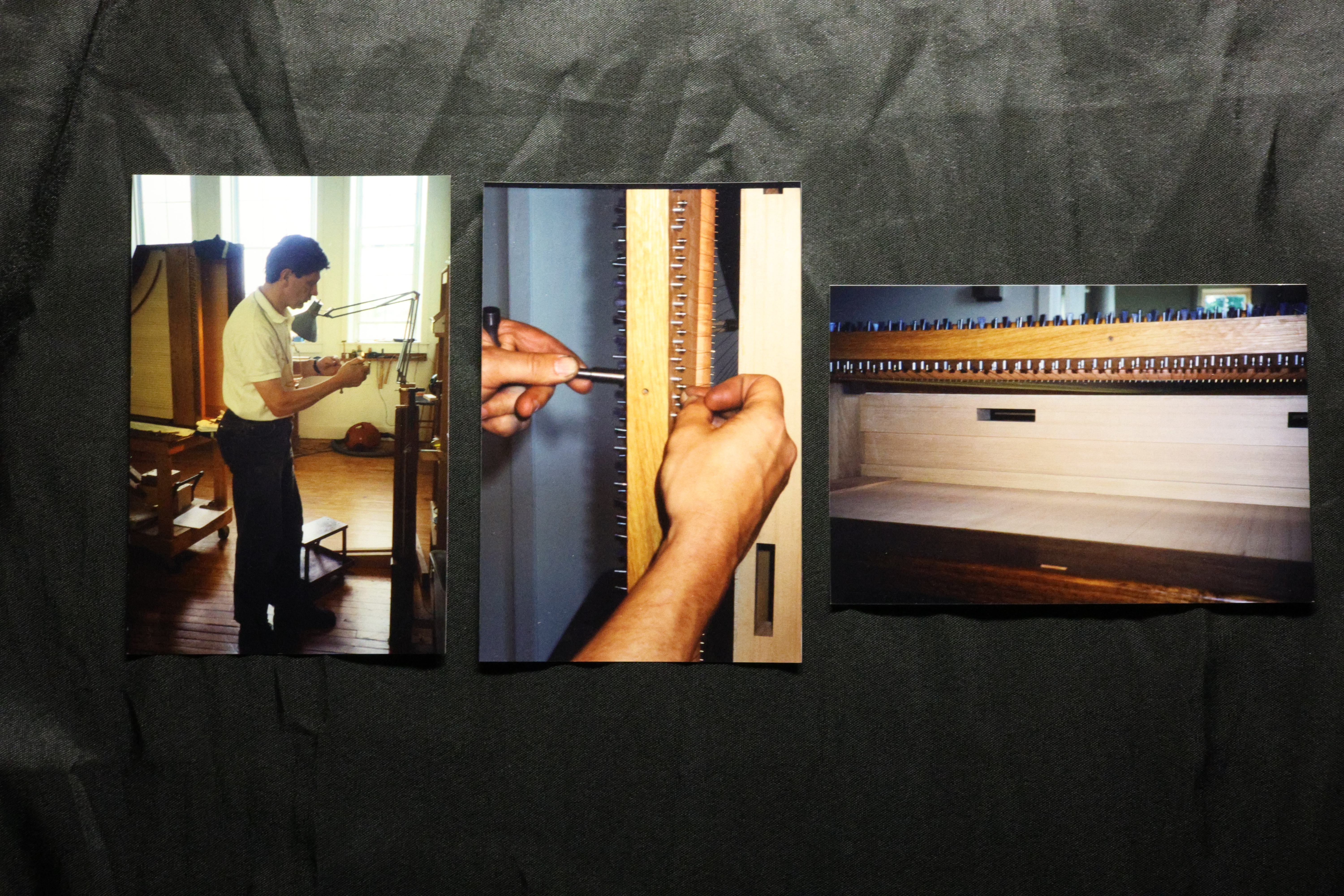
An important “lightbulb moment” arrived when the first Silbermann was ready for stringing. The inverted wrestplank characteristic of Cristofori-action instruments require the strings to run underneath the wooden pinblock. This makes stringing an apparent nightmare, in addition to killing one’s back. However, if the piano is placed on its side, it’s almost easier than the “normal” procedure, as the tuning pins are installed before the strings.
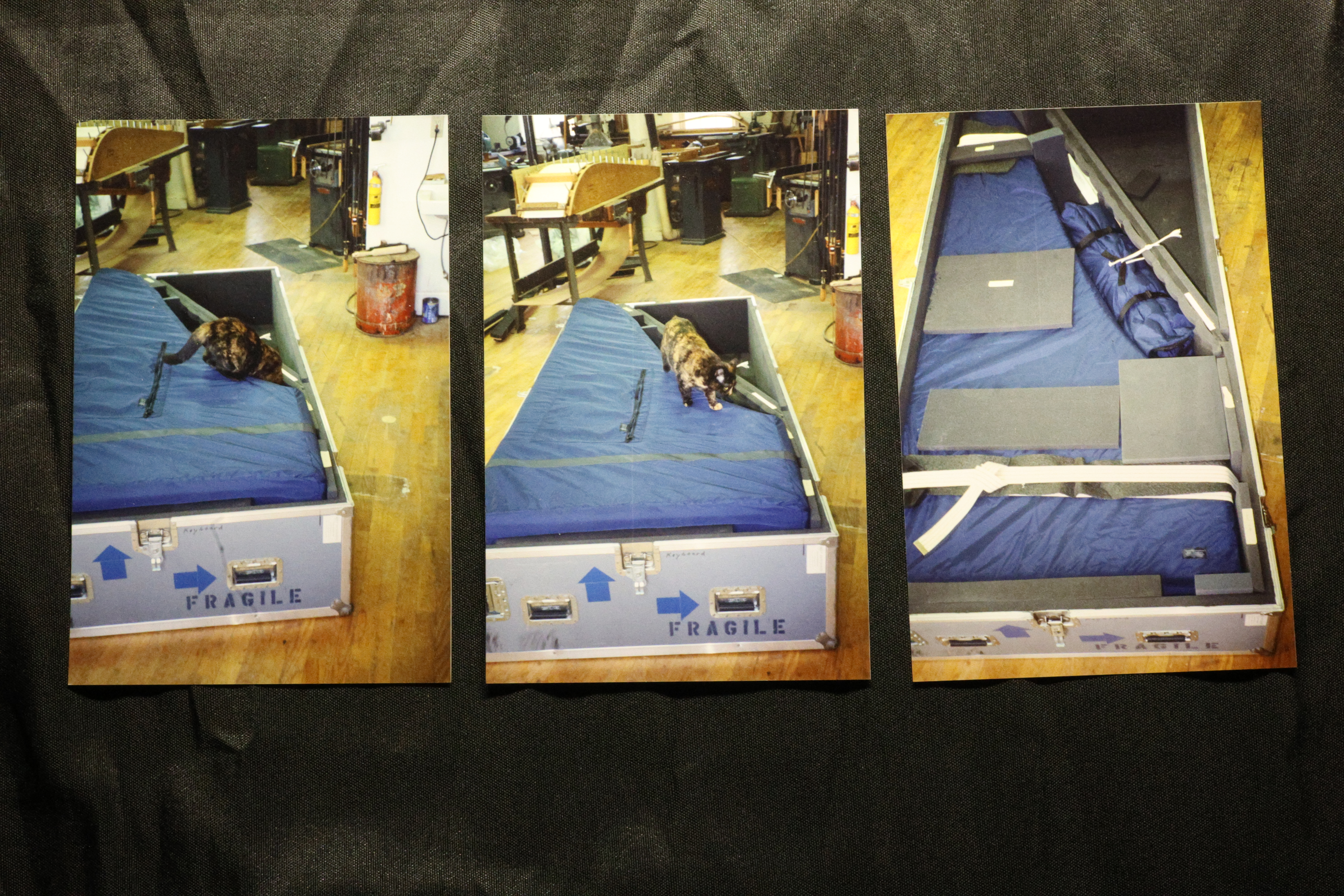
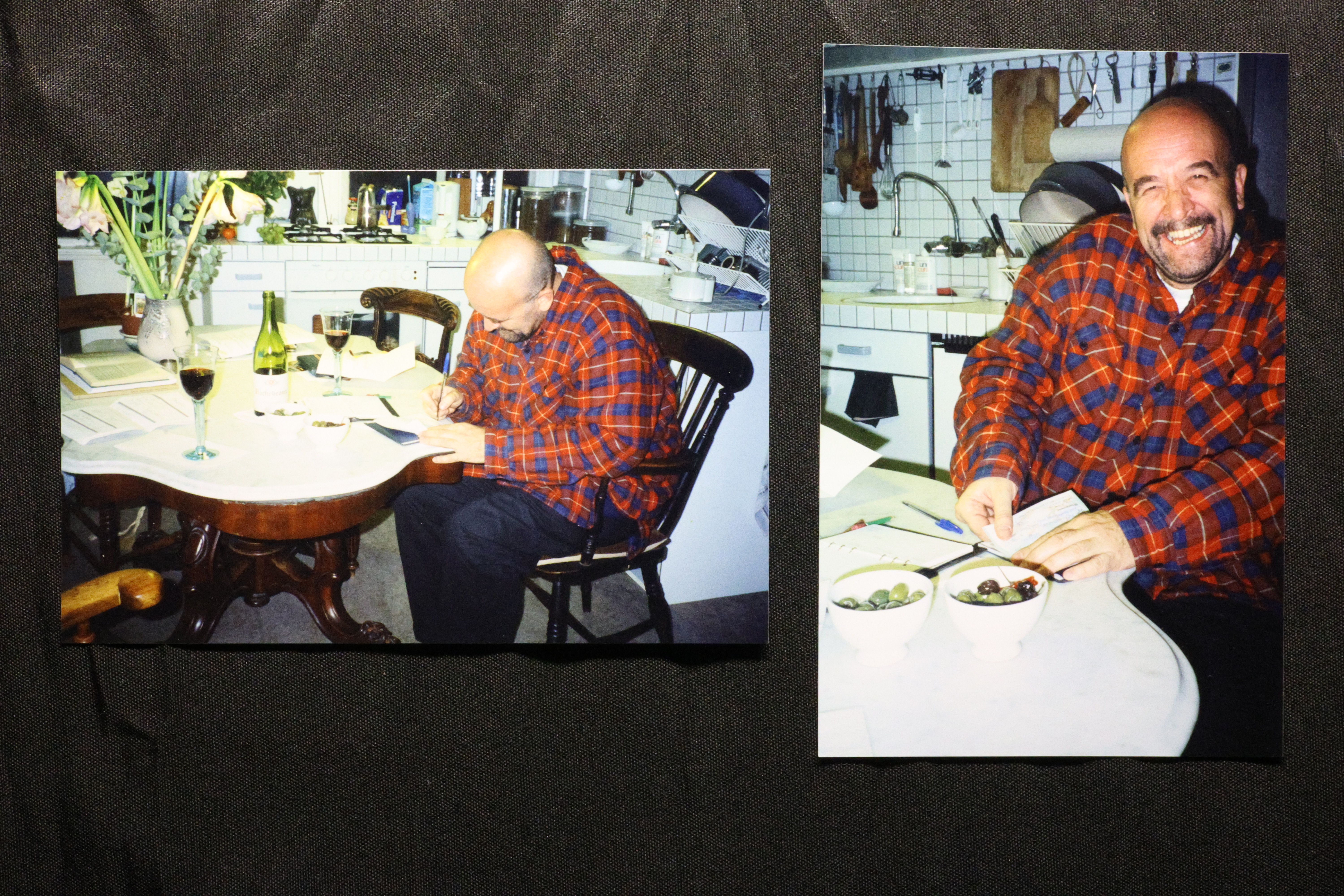
When Jacques Ogg’s piano was ready to go to Amsterdam, shop cat Ormolu (she being highly decorated herself) inspected the crate and packing for air freight-worthiness. After its arrival, Jacques had as much pleasure making the final payment as he had with the down payment.
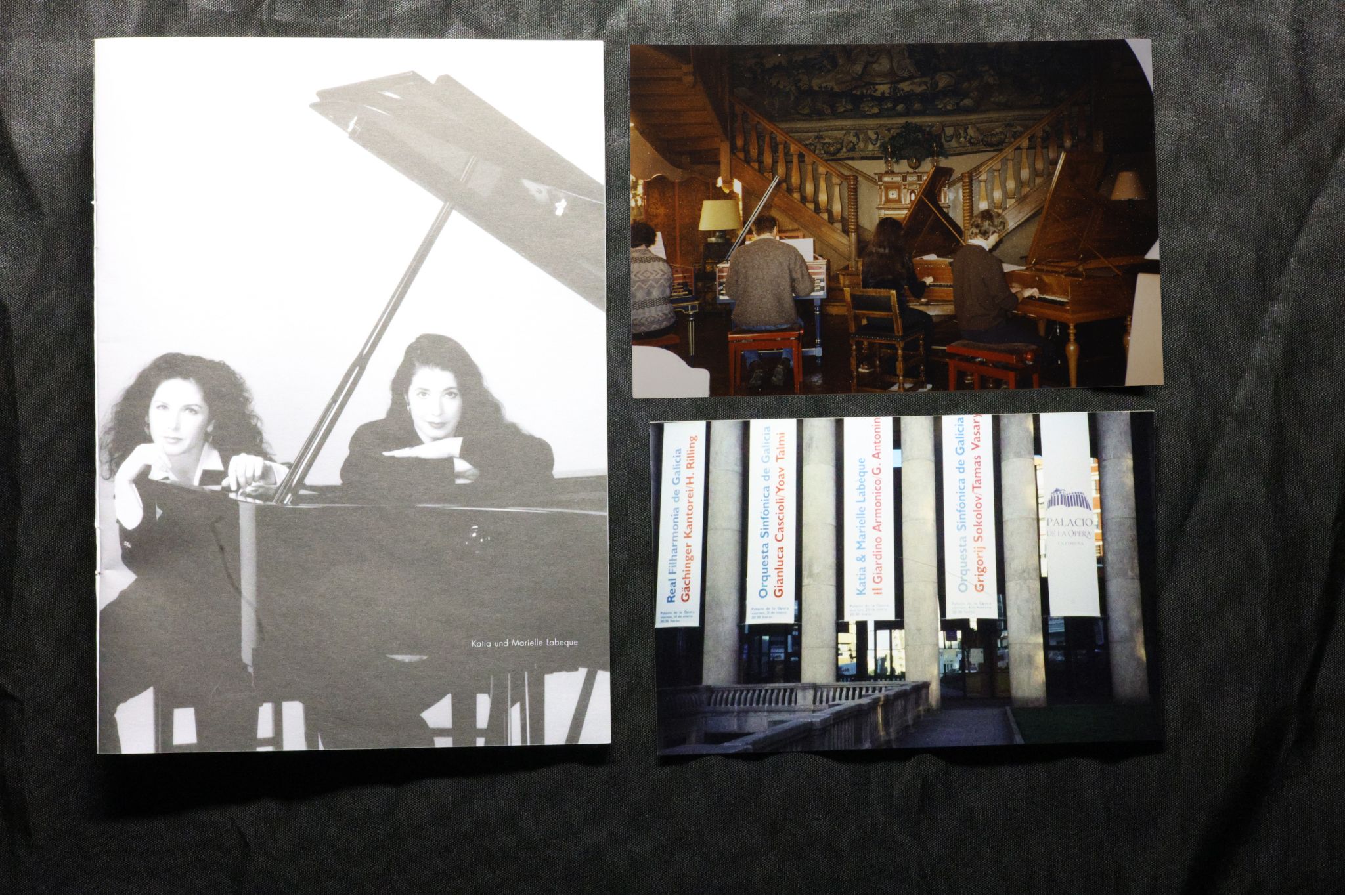
The Labèques were about to step off a cliff from their modern pianos into an early 18th-century aesthetic and technique more suitable for Bach. Initial rehearsals for the first tour in Spain took place at their house in Biarritz. In addition to their two Silbermann pianos, two harpsichords were added for the triple and quadruple concerti. All these keyboards just fit into the central downstairs hallway: fooling around on either side of Marielle are Giovanni Antonini (right), the recorder virtuoso and director of Il Giardino Armonico, with whom they would be touring, and Italian harpsichordist Ottavio Dantone.
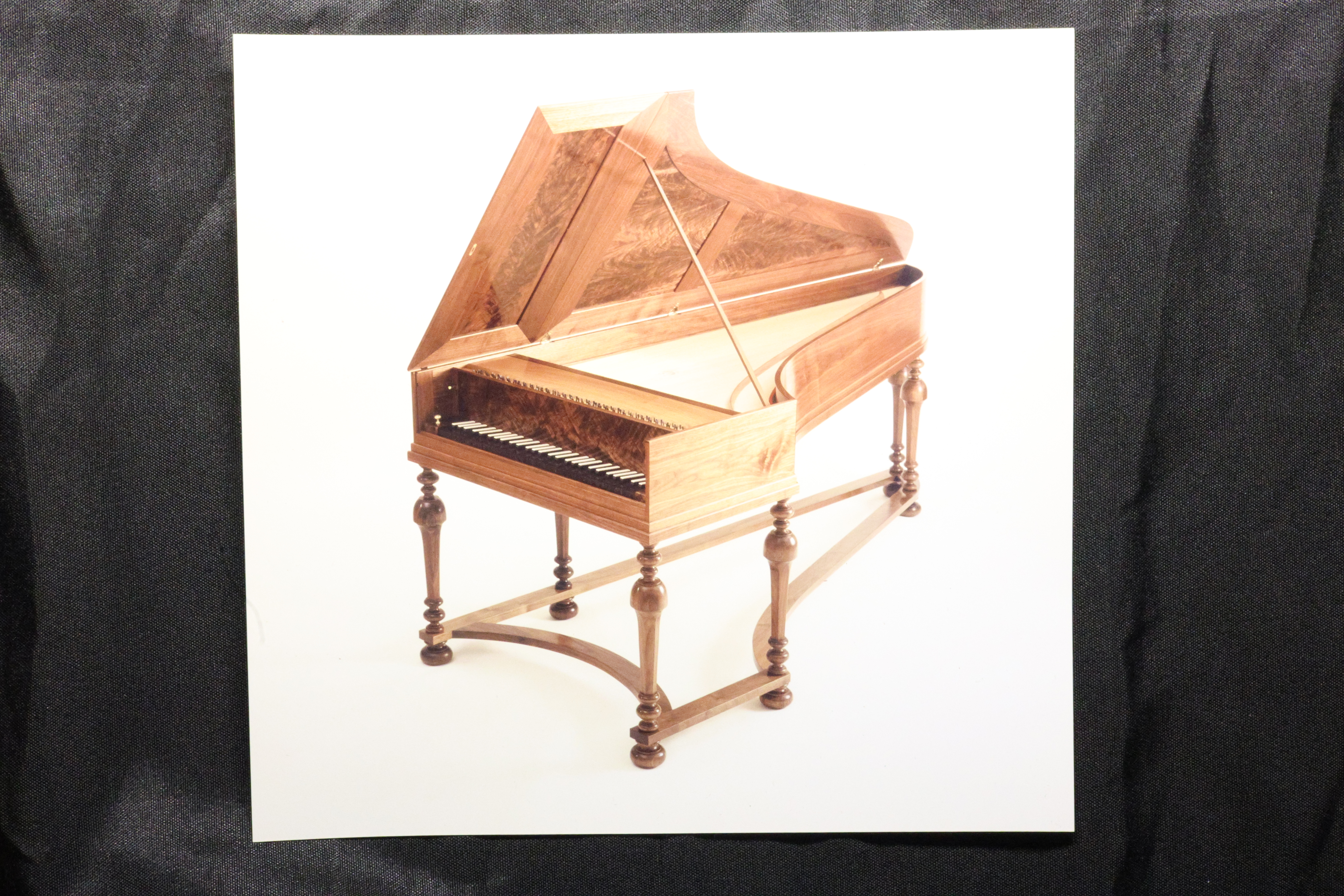
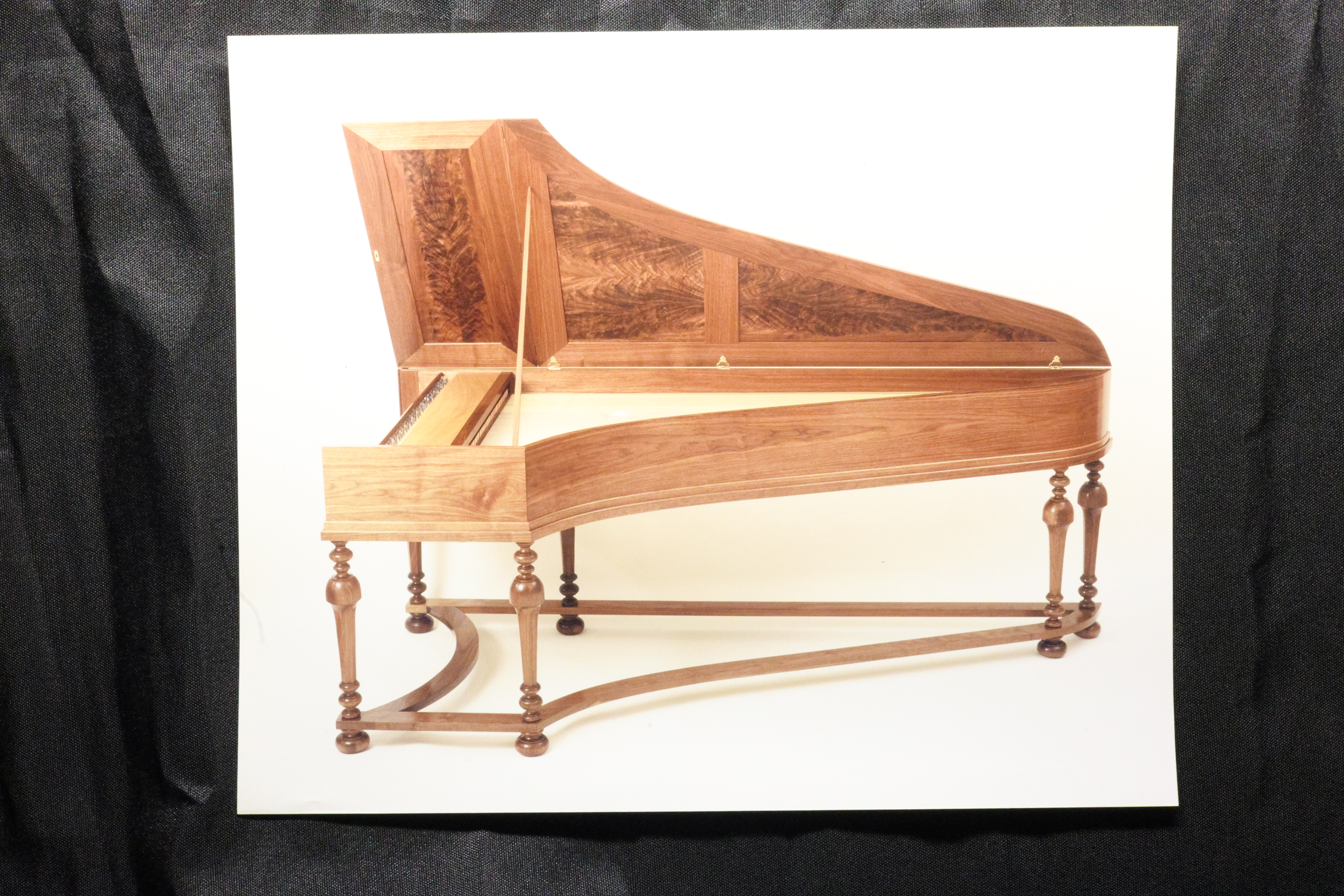
Before Jacques’ piano left, really good photos were taken to document the beautiful walnut lid panels and stand. And the Bach/piano tricentennial year was breathing down our necks…

