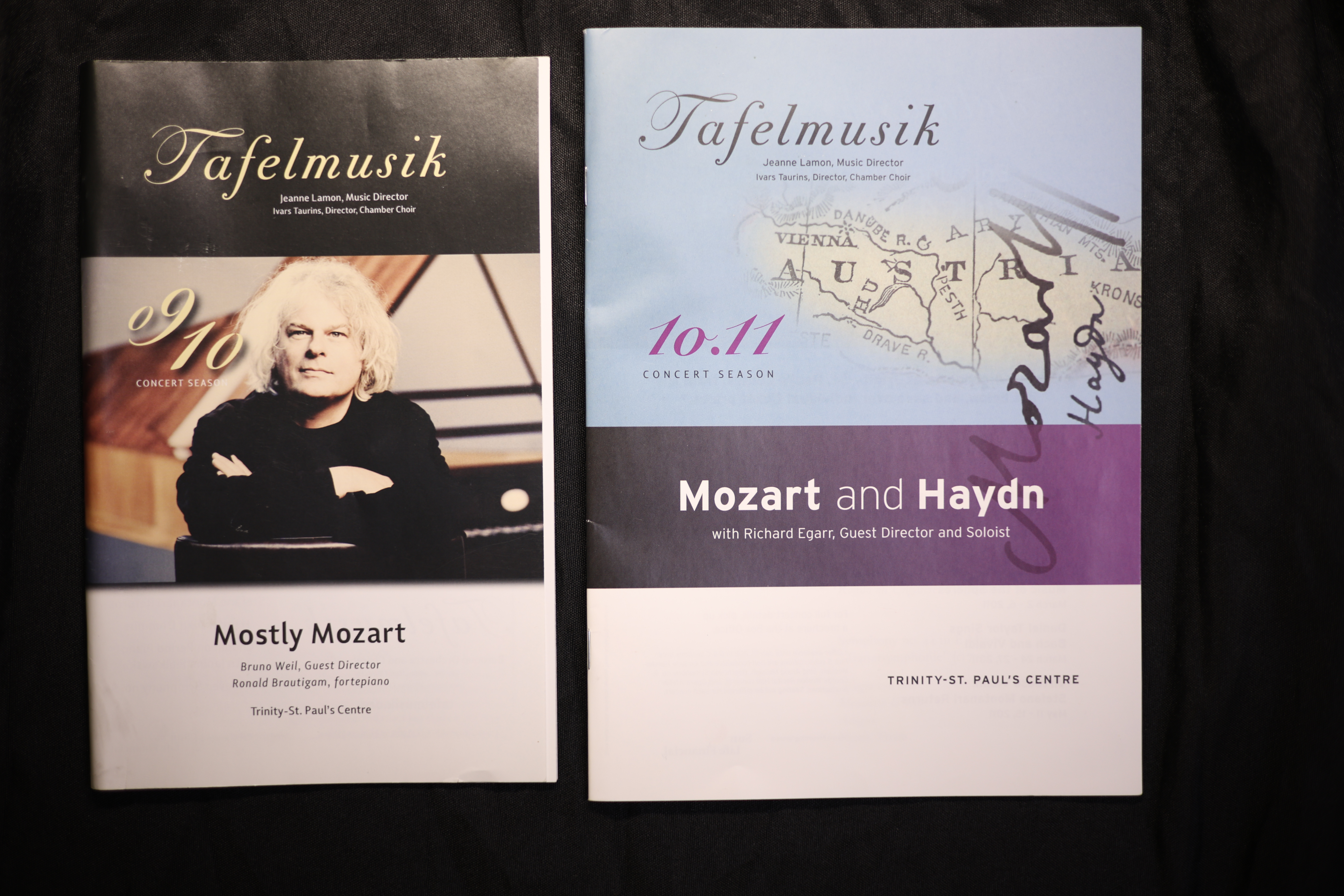
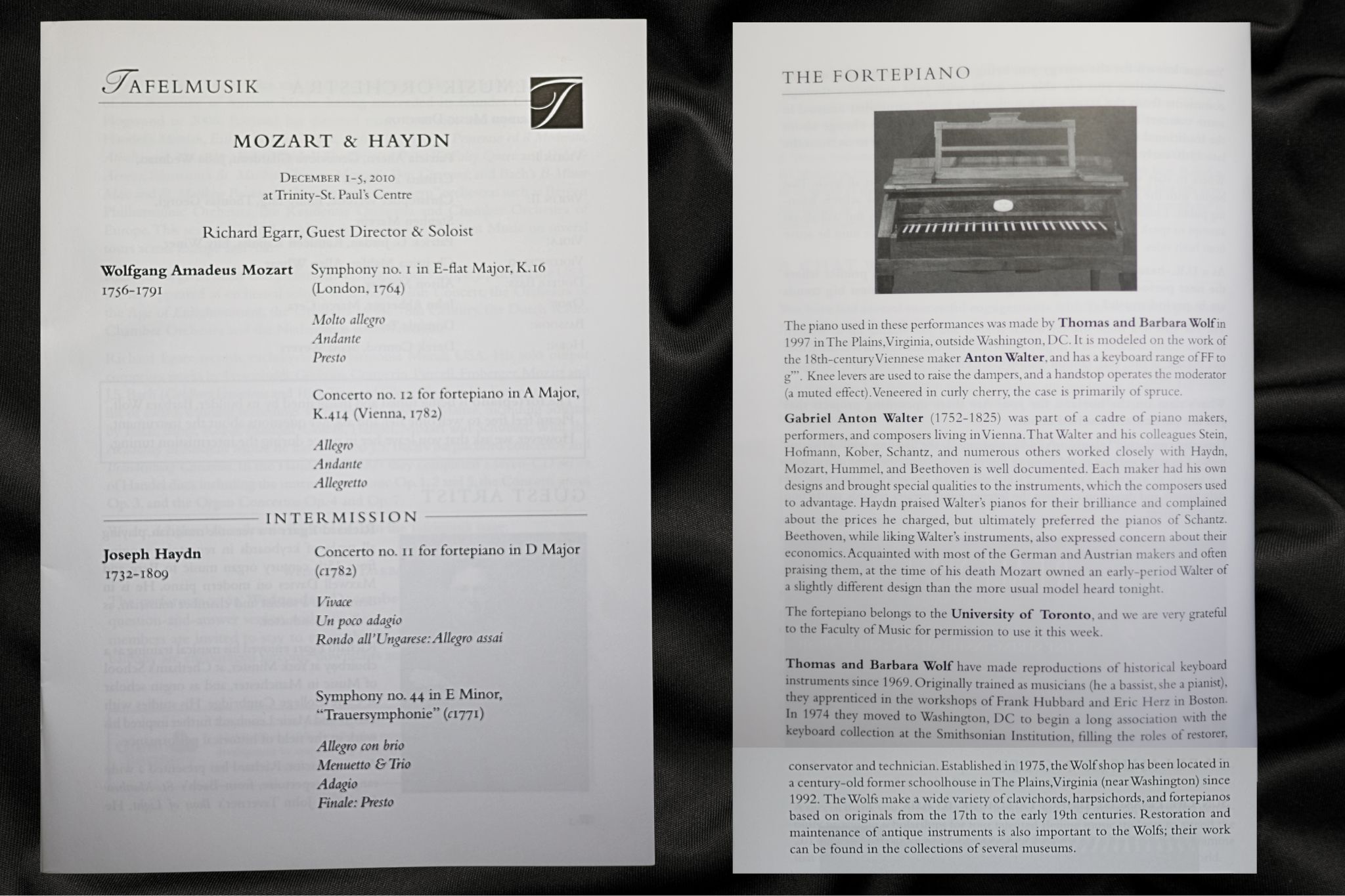
Ongoing work in the shop (a new bass commission, a harpsichord for Cornell, the Flints’ Kirckman restoration) was often interrupted by other demands: more concerts with Tafelmusik and our University of Toronto piano bookended 2010: Ronald Brautigam in January, and Richard Egarr in December gave us great exposure.
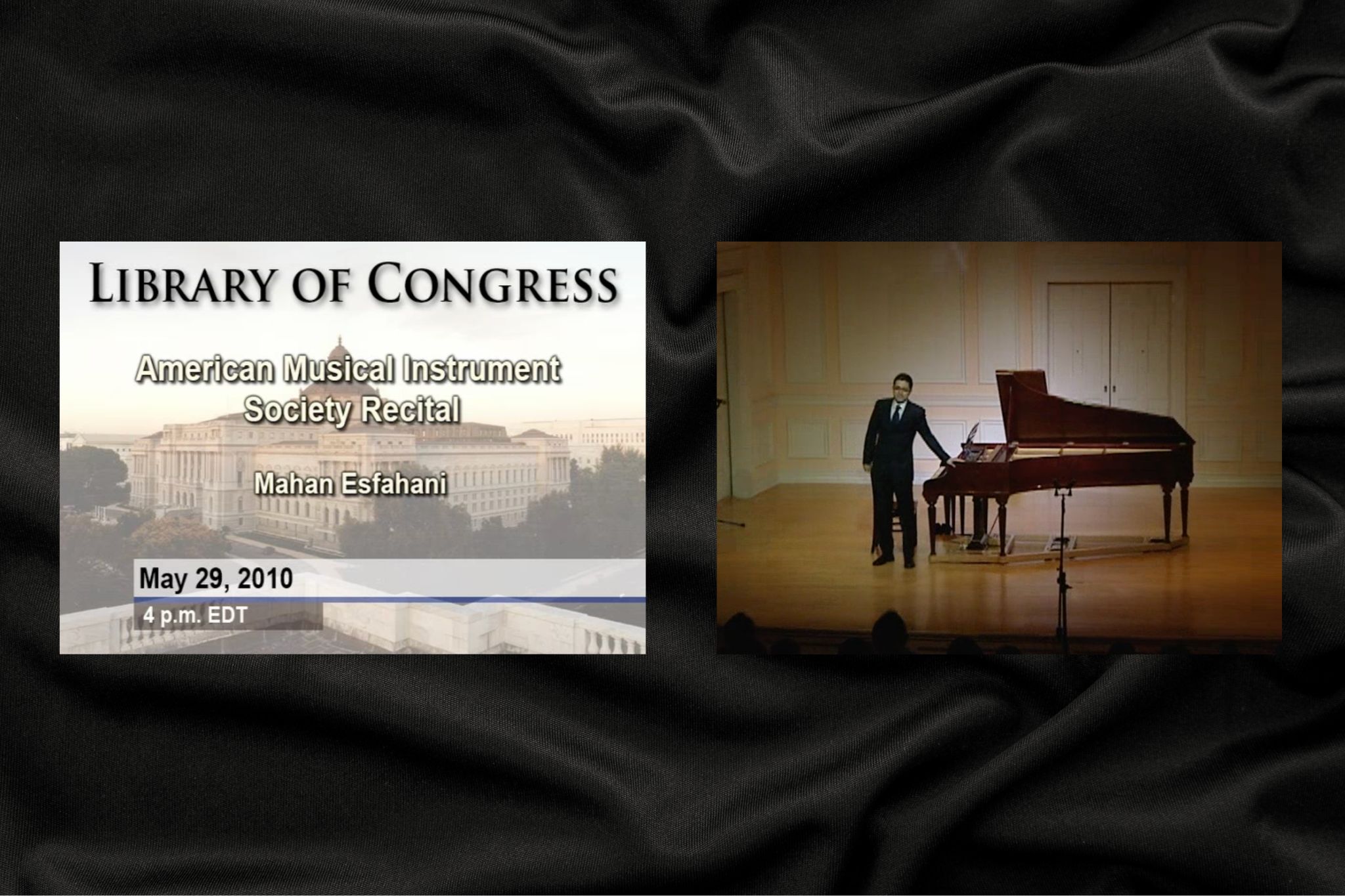
In May the American Musical Instrument Society (AMIS), an important influence in the world of organology, held its annual convention in DC, hosted by the Library of Congress. The Pleyel harpsichord we restored in 2008 was featured in its first solo concert. As a special field trip, interested attendees were bussed out to The Plains to see the second of Landowska’s Pleyels as its resuscitation began and have a shop tour. So many instruments to prepare at home, for additional related events at the Smithsonian, as well as the Library!
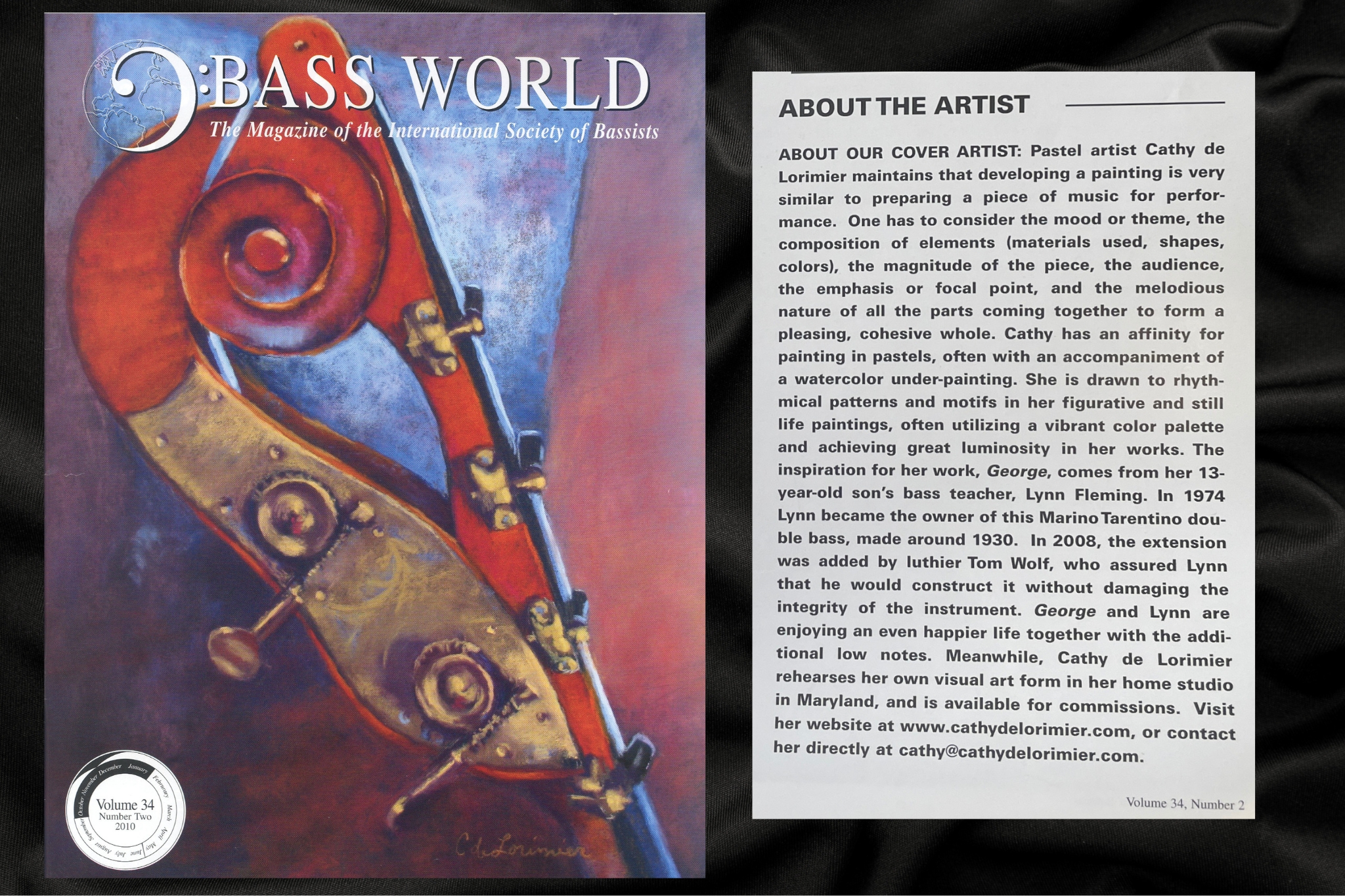
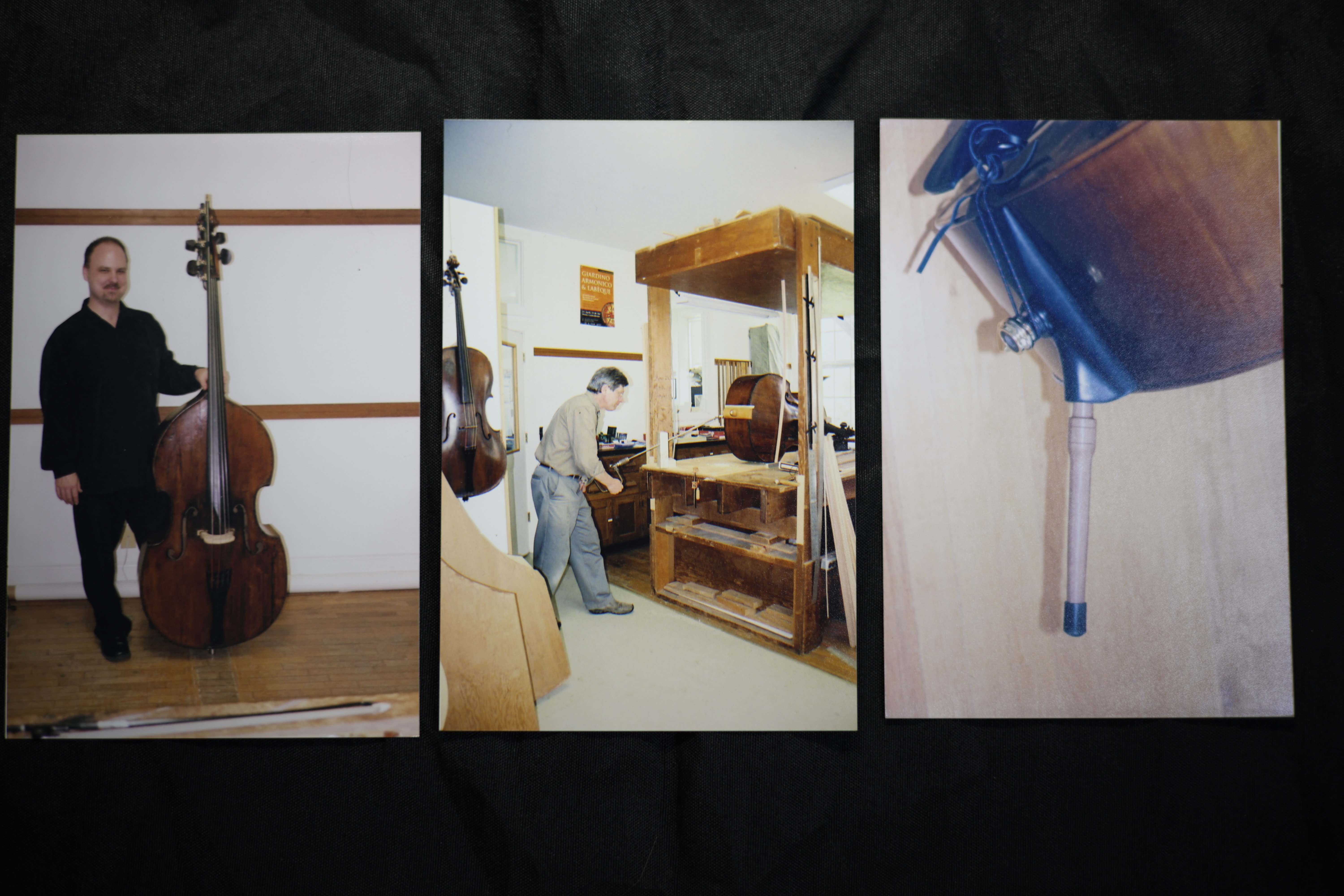
The double bass business continued to mushroom with repairs, alterations, restorations, and setup services. So it was a thrill to have a very clever extension Tom devised shown in a painting on the cover of the fall Bass World magazine. He didn’t cut or drill into the scroll of the Giuseppe Tarantino bass, preserving its integrity. The scroll was very narrow, allowing the string to be routed around it. The gears were replaced, but the engraved plates are original. At the other end (literally), when crackerjack bassist Donovan Stokes brought his old (Russian?) bass to us for a 5-string conversion, Tom also drilled it for an extremely angled endpin.
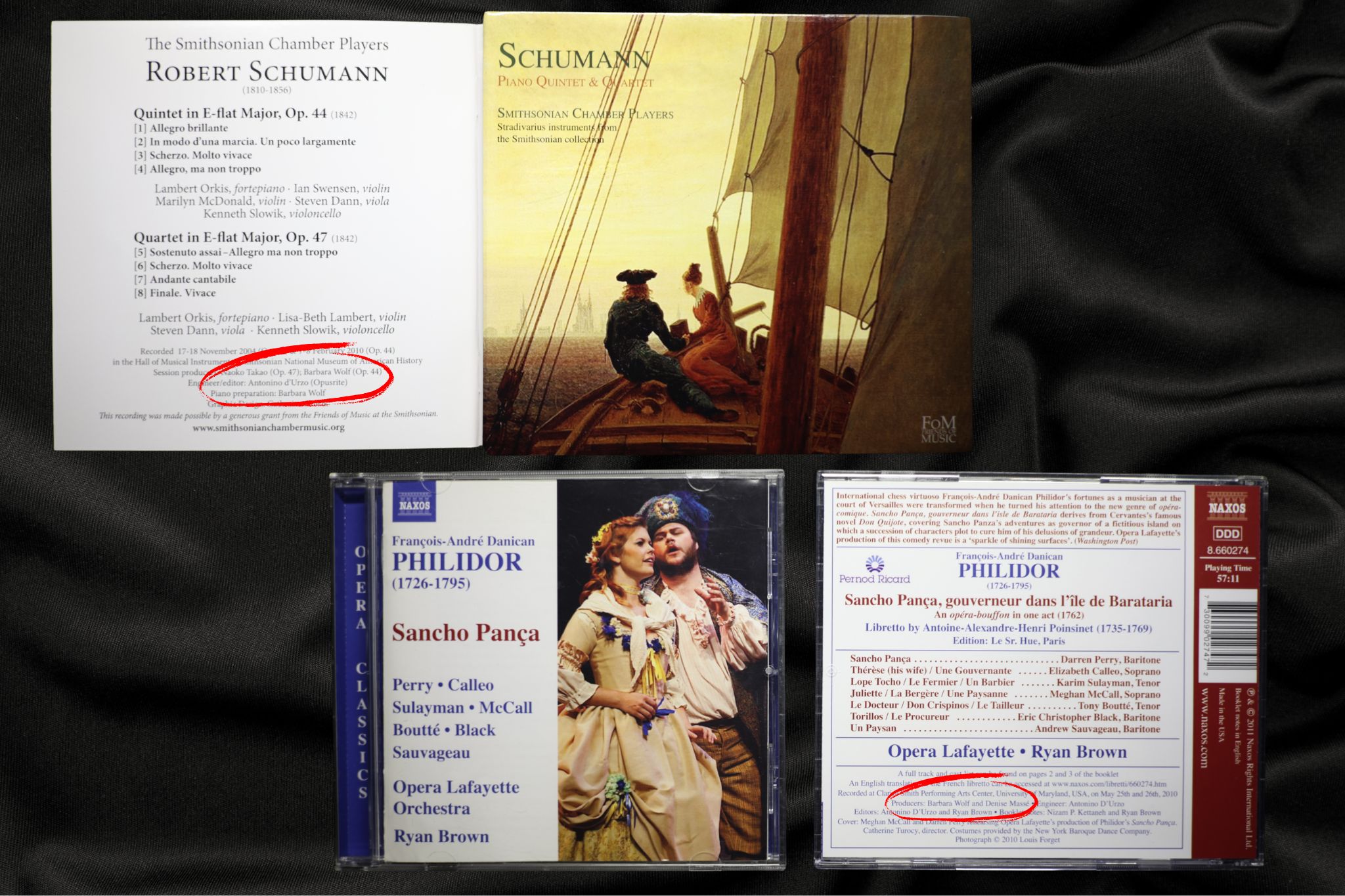
Outside the shop, Barbara was getting pulled into more recording production, even if she still had to maintain the keyboard instrument involved. This was the last time Opera Lafayette felt they needed a French diction coach (the Met’s!). And the Smithsonian marked the bicentennial of Schumann’s birth by recording his piano quartet and quintet using Stradivarius strings from the museum’s collection.

