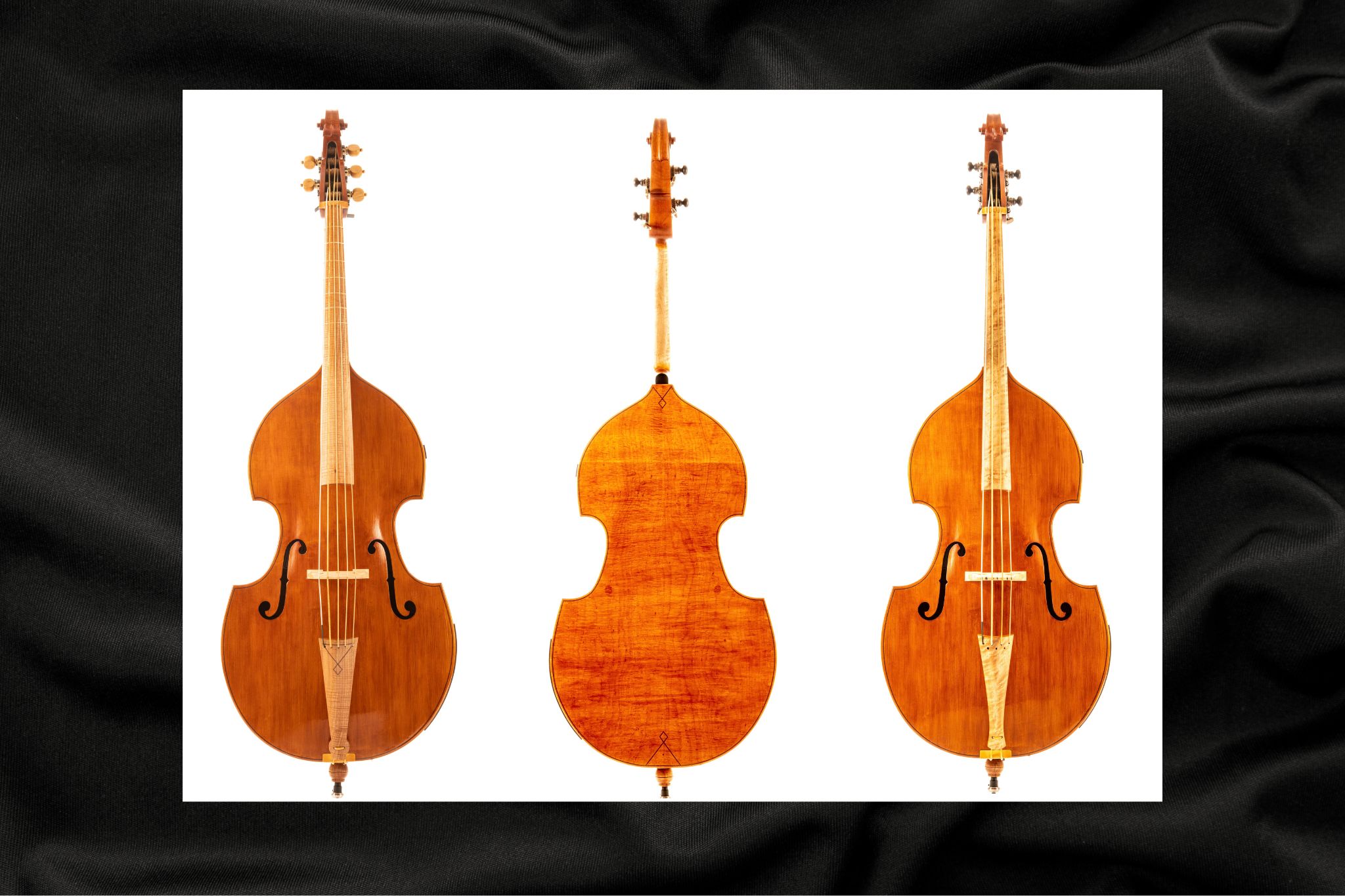
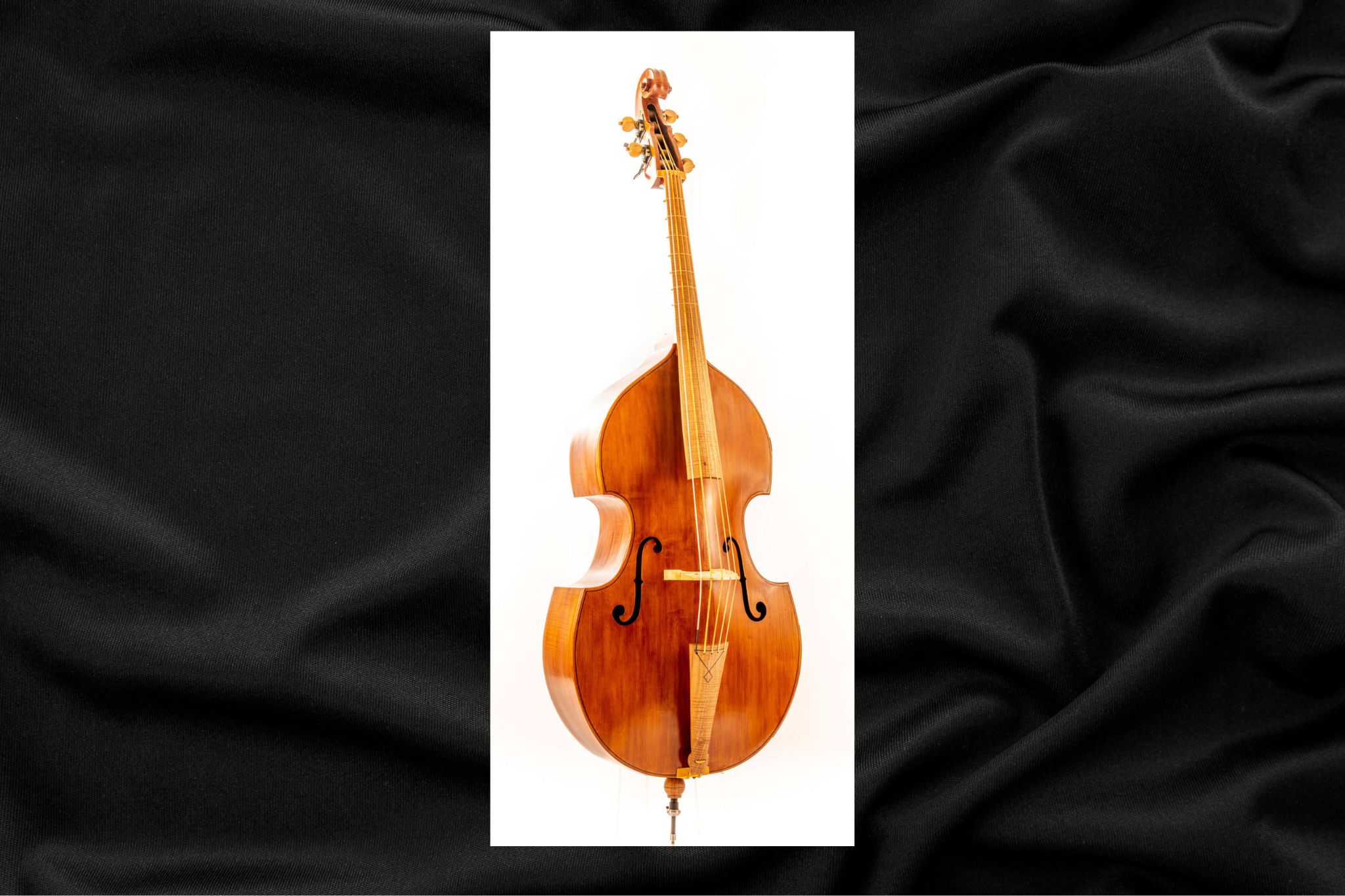
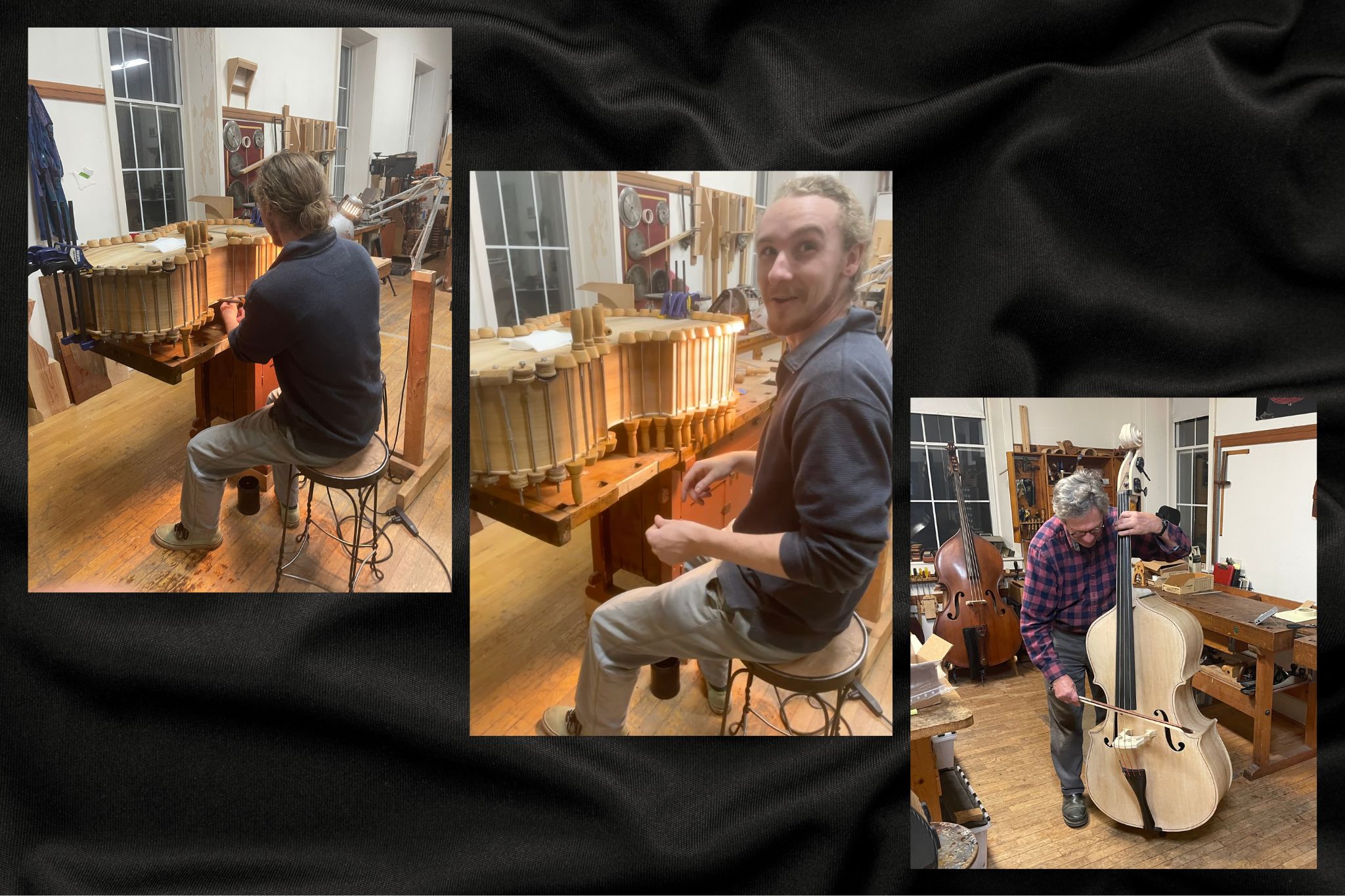
A major project during the covid shutdown was a uniquely versatile instrument for Shanti Nachtergaele. She was getting a doctorate from McGill University with a dissertation about historical bass tunings, which needed to be demonstrable. We made a bass patterned on 18th-century Viennese models that had two interchangeable E-flat necks (to allow for frets), two tailpieces, three bridges, three nuts, and 14 different gut strings. This allowed her to play in Viennese tuning with frets, 4-string modern tuning without frets, and multiple 3-string tunings. The 4-string tailpiece accommodates 3-string placement, and one of the tuners is easily demountable. Shanti got very facile at re-assembling the setup to order! The sides are flamed maple, the back is quilted and flamed maple, with an Italian bear-claw top.
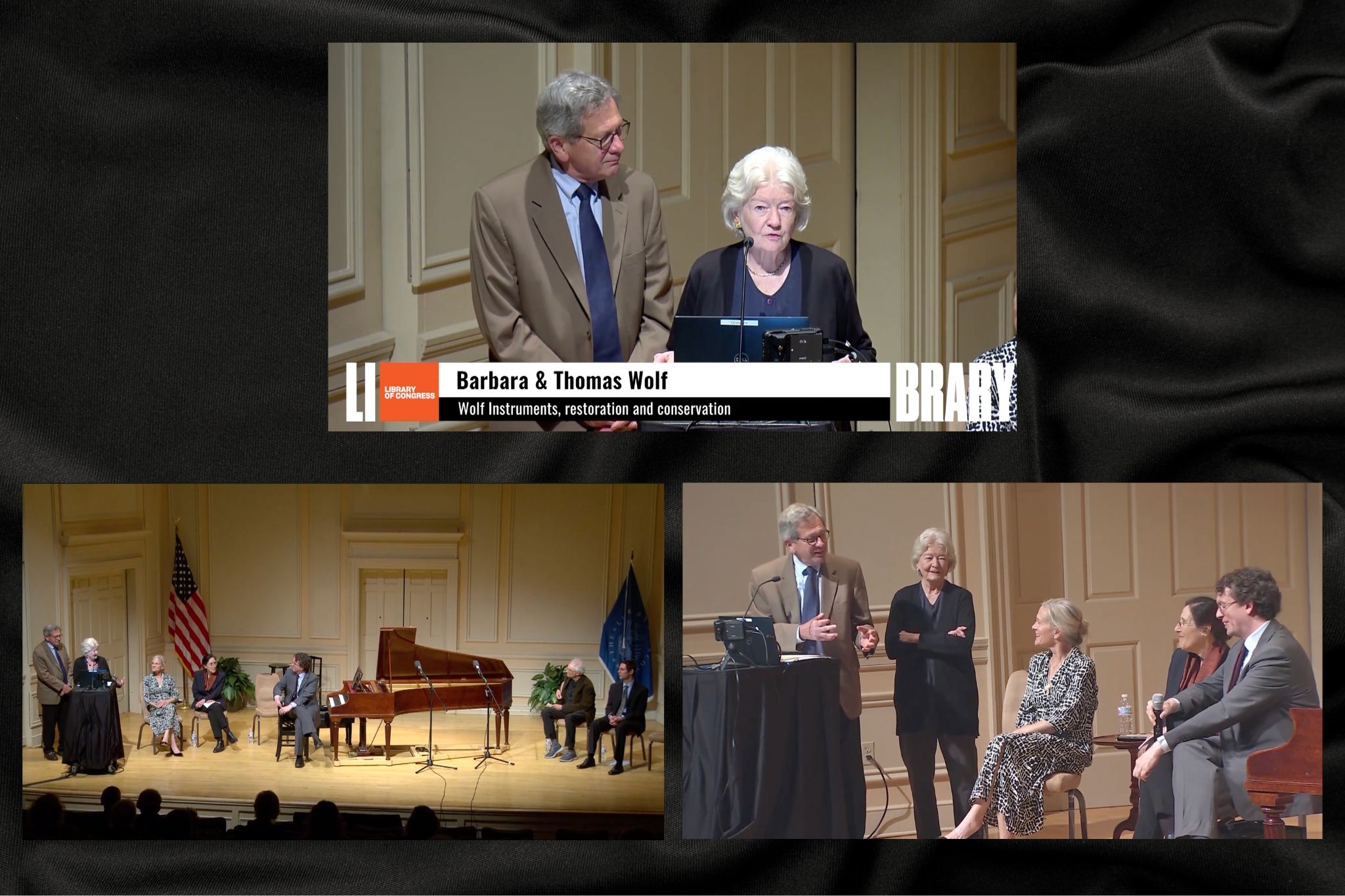
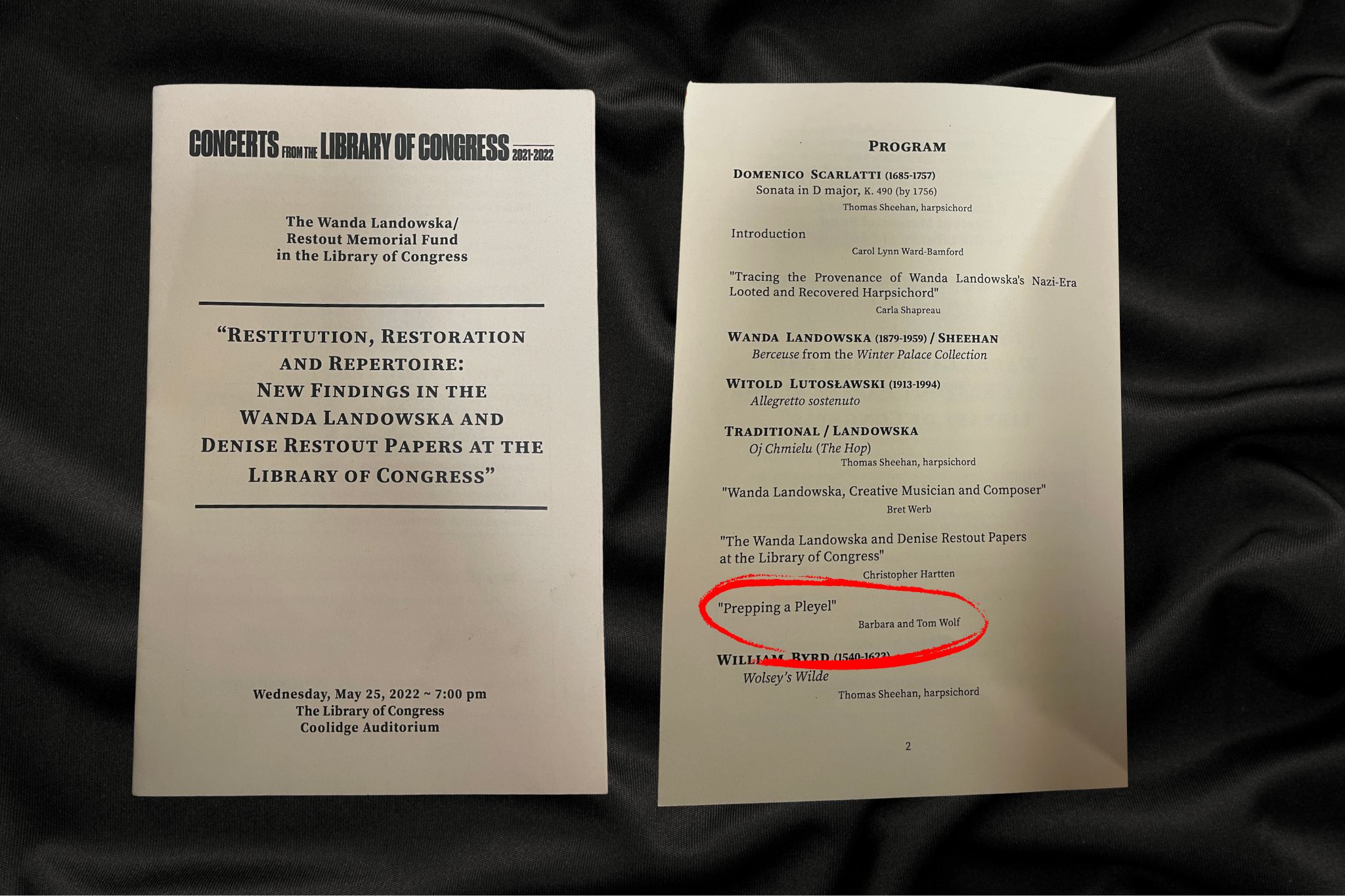
As covid cancellations and restrictions eased in 2022, concerts and public presentations were back more than ever. We were asked to participate in a symposium at the Library of Congress based on materials in the collection of Wanda Landowska, including one of her Pleyel harpsichords we had restored. After more than 15 years of use since we returned it to them, it needed some serious interior action regulation, which was done on the stage of Coolidge Auditorium, documented by a Library photographer. Our presentation focused on her Pleyels’ condition, what we had done to them, and why. It can be viewed toward the end of a videotaping available from the Library or on YouTube.
A second bass was underway by Jacob Stone in his “off” hours: patterned after a 1795 Pietro Pallotta original, it was different from the shop’s usual menu. Made with a removable neck, it was finished in the white by the end of the year, and Tom tried it out.
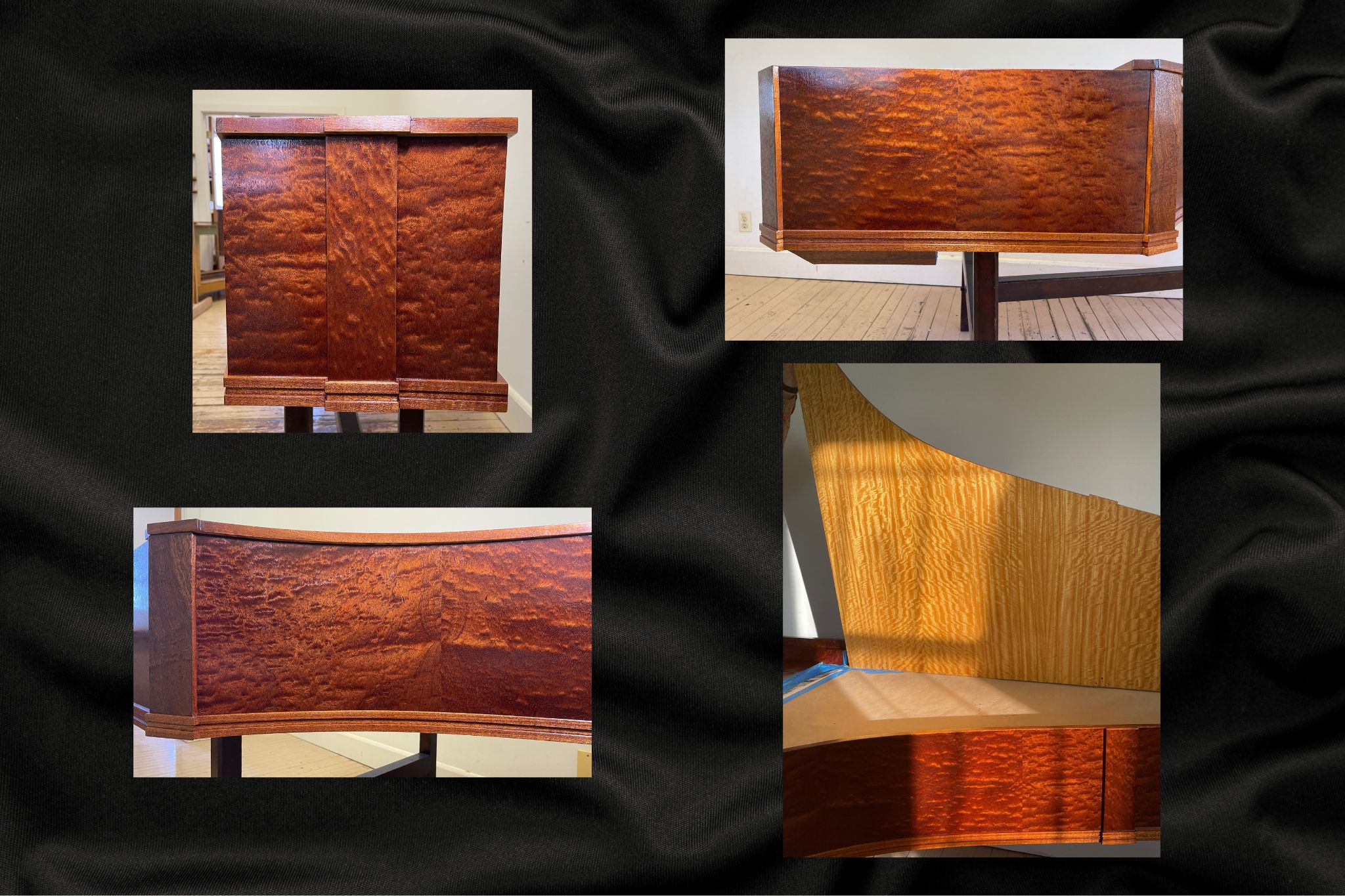
Another big order that finally got serious attention during the pandemic was a fortepiano for Juilliard (Schantz model). While it wasn’t finished until the next year, we took photos of the spectacular veneers (mahogany pommelle on the case and exterior, with bees-wing satinwood on the lid interior) while the instrument was being varnished.

